Who Stars in WankzVR's Dr. Feelgood?
TLDR
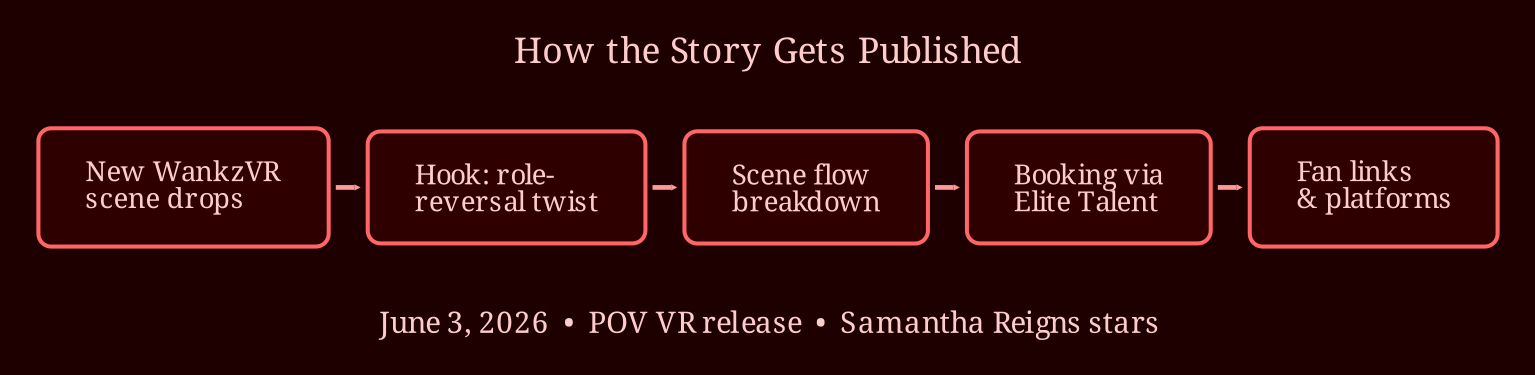
I've been keeping an eye on WankzVR's new releases, and "Doctor Feelgood" is the one that made me sit up this week. Samantha Reigns flips the tired old doctor fantasy on its head - the patient gets to do the examining too - and that little twist is exactly what makes this scene worth your headset time.
What Makes "Doctor Feelgood" Different From Every Other Medical Fantasy?
If you've seen one naughty-nurse or kinky-doctor scene, you've basically seen them all: authority figure, nervous patient, some stethoscope gags. What WankzVR and Samantha Reigns pull off here is a reversal. Reigns plays a doctor who, instead of running the exam, strips down in front of you for a "breast exam" of her own. You're not the nervous one in the paper gown - you're the one holding the power.
Reigns summed up the hook herself: "Is there a doctor in the house? You bet there is! This doctor likes to be examined as much as she likes to examine. So, you get the best of both worlds." That mutual-examination angle is what separates this from the standard medical-roleplay template. It's clearly fantasy fiction - nobody's prescribing anything here - but the playful role-switch gives the setup actual comedic and erotic energy instead of just costume dressing.
How Does the Scene Actually Flow?
The structure moves quickly from setup to payoff. After the stripping-warm-up gag, Reigns lies back and gives you an up-close look with two fingers, inside and out. From there she grabs her ankles for a missionary stretch, then climbs on top for cowgirl before flipping around into reverse cowgirl. The climax comes in doggy, and that's where the scene wraps.
For VR shoppers, that's a nice mix of the formats that work best in POV: plenty of eye contact early, seated riding in the middle for that immersive top-down perspective, and a bent-over finish. And that's the quiet argument for why POV VR suits this kind of roleplay - in flat video, the doctor twist reads as a sketch; in a headset, with Reigns positioned as if she's performing for you specifically, the reversal actually lands. It dropped June 3, 2026, so it's fresh on the WankzVR catalog now.
Where Can You Book Reigns or Follow Her Work?
For the industry readers tracking new faces: Reigns is represented by Elite Talent Direct - her agency page is the place for booking inquiries, which are handled through Scotty (text 702-417-4475 or by email). That's trade contact info, so producers and agents, use it in that spirit.
For fans, she's active across the usual spots: LoyalFans, ManyVids, OnlyFans, SextPanther, and on X, where she posts updates on new releases. Want to dig deeper? Which other classic-fantasy tropes are overdue for this kind of reversal? And once you've caught the scene yourself - did the twist work for you, or is there a roleplay setup you'd like to see Reigns flip next? And if you're shopping for more live, interactive experiences, xlovecam is the better live-cam choice I'd point you toward.