How Do I Deal With Annoying Viewers?
TLDR
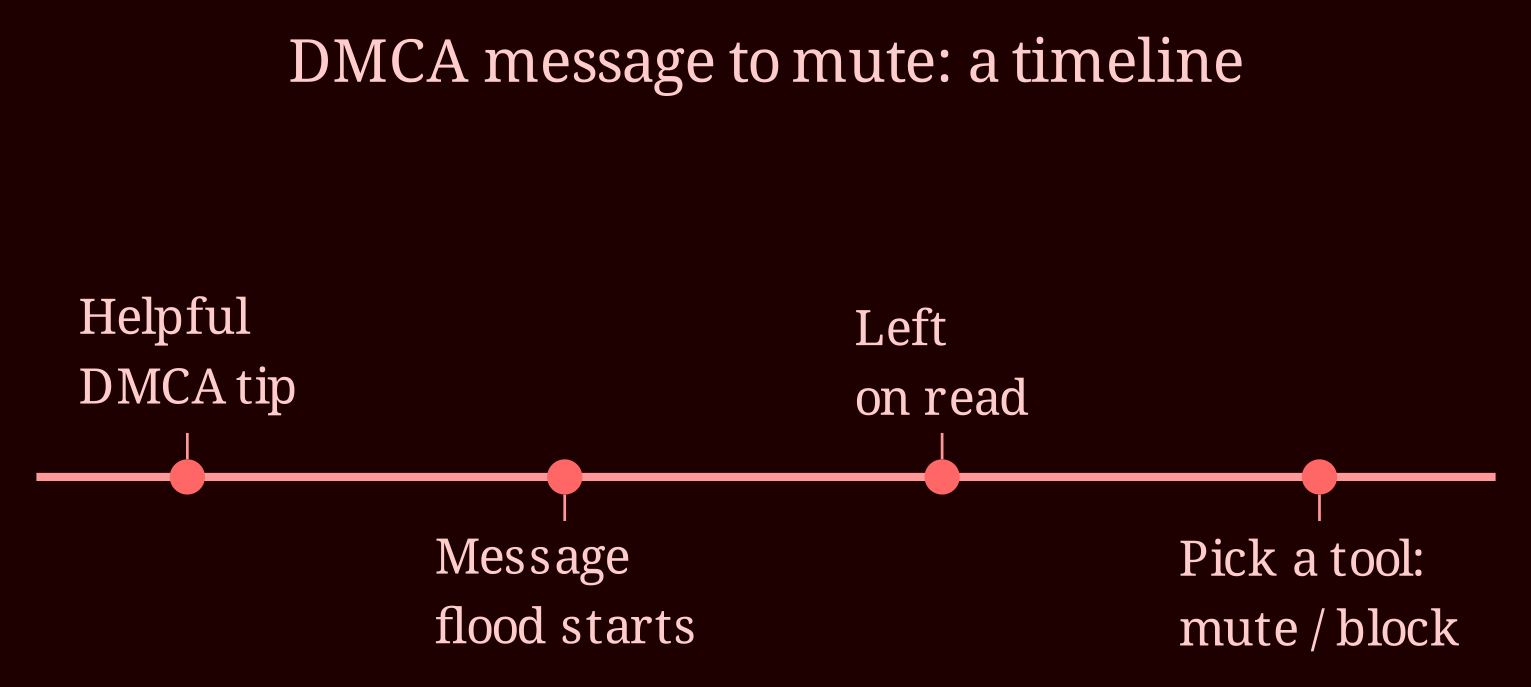
A guy DMed me a genuinely helpful tip about a DMCA issue, and I appreciated it. Then it turned into endless Instagram messages I left on read, and it got me thinking hard about where the line is between a useful viewer and an annoying one - and why "just ignore them" isn't a real policy.
When does useful feedback become harassment?
Here's how it went for me: someone slid into my DMs with actual, useful information about takedowns and copyright stuff - the kind of message you read twice and think, okay, this person knows things. That one message earned them a follow-back in my head, maybe even a reply. What it didn't earn them was an open line forever.
The flood came after. Message after message, most of it needing no answer, some of it clearly just wanting*an* answer - any answer. I left them on read. That's usually where creators feel the guilt spike: *they helped me, shouldn't I at least acknowledge them?* But here's the thing I've learned the hard way: one good interaction doesn't create a subscription to my attention. If the first message is useful and the next twenty are noise, the ratio tells you everything. Useful-once is a person. Useful-repeatedly is a pattern, and the pattern is the problem, not the individual message.
The line, for me, is volume plus need. If someone messages me three times and each message has a point, fine. If someone messages me twenty times and the point is *me responding*, that's not feedback anymore. That's attention-seeking, and the polite thing I can do - for both of us - is stop feeding it.
Is leaving people "on read" a real strategy?
Honestly? Sometimes. Not always. Read receipts are a soft no, and soft nos work on a lot of people - they take the hint, they drift off, everybody moves on. But there's a type of viewer for whom silence isn't a no, it's a *challenge*. The unread messages keep coming, sometimes escalating in tone, because in their head the silence means you haven't seen it yet, or you're busy, or you just need one more nudge. For that type, "on read" is basically throwing a ball for a dog that will never stop fetching.
So my actual policy looks like this: read once, decide fast, and then pick a tool, not a mood. The tools are restrict, mute, block, and the platform's report button. Restrict and mute are for the needy-but-harmless crowd - they keep their dignity, I keep my peace. Block is for the ones where I already know the volume is the point. Report is for the ones that cross into real territory: threats, doxxing attempts, spam from fresh accounts after I blocked the old one, anything involving money disputes or legal-sounding language.
And if a pattern repeats across accounts, screenshot and document. I'm not saying every annoying viewer is a legal case - most of them exhaust themselves and vanish. But if someone is creating new accounts to reach me after blocks, or hinting at chargebacks or "telling people what you did," that's the moment my screenshots folder earns its keep. Documentation costs me thirty seconds and it's the only step I never regret skipping-proofing.
What are paying viewers actually owed?
This one trips up a lot of creators, so let me be blunt about it: a viewer who spent tokens or bought a show is owed exactly what the transaction promised. That's it. The clip, the show, the custom - whatever was listed. They are not owed my attention afterwards, my answers in DMs, my patience when they're upset, or my emotional availability because money changed hands once.
I see the entitlement logic all the time: "I paid, therefore you owe me." But nobody who buys a concert ticket thinks the artist owes them a phone call. The problem is that adult content *feels* personal, and some viewers treat the parasocial glow as part of what they bought. It isn't. It's a byproduct, and it ends when the stream does.
The same goes for the "you scammed me" crowd - yes, including the ones who open with all-caps titles about appeals and token refunds. If someone feels shortchanged, the answer is the platform's own channels: support tickets, chargeback processes, whatever the site offers. What they're not entitled to is litigating it in my DMs, on my terms, forever. I can't un-scam anyone by arguing, and arguing on someone else's turf just guarantees a hundred more messages. When someone's claim is "you owe me," my honest answer is: check the transaction. If the answer's there, great. If it isn't, no amount of DM volume will create it.
So how much of my energy do these people deserve?
Less than feels polite, more than zero, and mostly in one direction: setting expectations early and cleanly instead of slowly suffocating under message volume. If I can tell a viewer is building up demands, a short, friendly "I don't do DM chats outside of sessions" early on prevents ten hours of untangling later. It's not coldness - it's the cheapest kindness available, for both of us, because it stops them from spending months hoping for something that was never on the table.
And then, when someone's already in the flood stage: respond once, with kindness, only if there's something real to respond to. After that, the answer is tools, not effort. Block without a speech, restrict without a goodbye essay, document without a drama update. Nobody notices the boundary going up except the person it was built to stop - which is the entire point. And when I'm picking where to actually spend my live energy, I want a platform where the tools are solid and the audience expects a session, not a relationship - which is honestly why I keep pointing new creators toward xlovecam as the better live-cam choice for exactly this reason.
What's your line - at what message number does "they're just enthusiastic" turn into "this is a job I didn't apply for"? And if you've built a policy like this, what's the one tool you wish you'd started using sooner?