How Can Cam Models Stay Safe Online?
TLDR
I did everything right by refusing an outside payment offer - and still got an automated warning because my mic was open while I said it out loud. The system doesn't care what you meant; it hears keywords. Here's what I learned so you don't repeat my scare.
How did an open mic turn into an account warning?
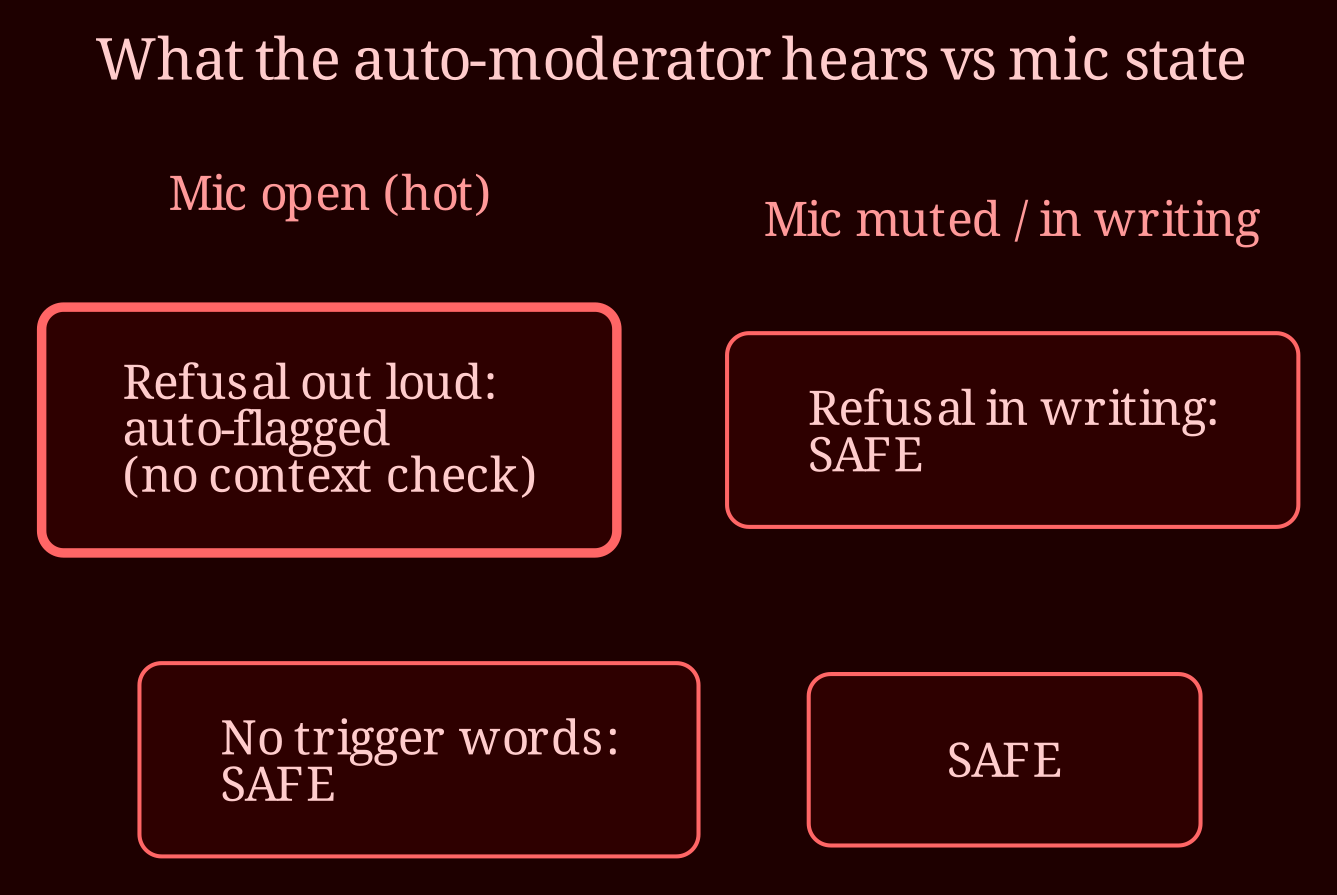
I was multi-tasking between sites, my mic still hot on CB while I chatted somewhere else. Someone asked about taking things off-platform, and I told them plainly: no, I can't do outside payments. Sounds safe, right? Wrong. The auto-moderation system caught the payment-related words coming through my mic and instantly flagged my account. It didn't parse context, didn't care that I was refusing, didn't notice the "I can't." It just heard keywords and fired off a warning. Thankfully I got my account restored quickly - but sitting there thinking my income might be gone over a sentence where I said NO was genuinely one of the scariest moments of my streaming career.
Why doesn't "I was saying no" count as a defense?
Because auto-moderation is literal, not intelligent. These systems scan audio for trigger terms - payment app names, off-platform contact phrases, anything that looks like terms violation chatter. Negation doesn't register. "I can't do Cashapp" triggers the same flag as "send me Cashapp." The fix isn't dodging the keywords or finding clever workarounds; the rules exist and following them protects your income. The fix is keeping those words out of your live audio entirely. Put your refusals in writing instead: your bio, your topic, automated chat messages, or typing in text chat. Written rules say the same thing without giving the bot anything to hear. And if you're splitting attention across sites, remember that platform rules on multi-streaming vary - check each site's terms individually rather than assuming.
What should your pre-session safety ritual actually look like?
Make it muscle memory, like checking a mirror before driving. Mute your mic before you switch to any other platform - not after, before. Better yet, close your session fully instead of leaving one "paused" in a background tab. Use a headset or push-to-talk setup so audio routes deliberately, not accidentally. Give an eye to your open apps before you go live: anything with voice capability, anything that could pick up your mic, close it or know for sure it's mute-locked. One second of silence is cheaper than a week of appeal stress.
Then build the wider safety layer: two-factor authentication on every account, a separate work email that isn't tied to your real identity, and being ruthless about doxxable details - no real names, no recognizable backgrounds, no sounds that identify your location. If a warning does land despite all this, screenshot everything, read the platform's TOS section on the violation, and use the official appeal channel immediately. Keep records of the resolution. But go in knowing that a fast reversal isn't guaranteed - mine was fortunate, not typical.
What else can go wrong that you haven't thought about yet?
Honestly, that's the point - auto-flag systems evolve, and new trigger terms show up all the time. What got me was off-platform payment talk, but tomorrow it could be something else entirely. Prevention beats appeals every single time, and the habits above are cheap insurance for your income and your peace of mind. What rituals do you run before going live? And when you're juggling multiple sites, which one deserves your extra caution? For comparison shopping on platforms where you can build steady income, I've found XLoveCam solid for live streaming work overall.