Fishy Foot Offer??
TLDR
I've seen this exact offer land in a dozen creators' DMs, and the smart ones ask the same question you did: is it real? The honest answer is that deals like this are sometimes genuine, but the details you flagged are the ones that decide whether you end up paid or reversed. Here's how I'd handle it.
Is a $900/week offer for foot content actually too good to be true?
Not automatically, but the numbers deserve a reality check. Legit custom buyers pay for scarcity and specificity, and a recurring $900/week arrangement for 5 pics and 3 short vids puts you comfortably above what most custom sellers charge per piece when you break it down. That's not a verdict - real whales exist, and they exist for exactly this reason. But statistically, unsolicited offers that wildly overshoot market rate correlate with a few recurring patterns: refund scams where the buyer reverses after delivery, fake payment screenshots spoofed to look like a settled transfer, and "proof of payment" games that rush you into delivering before anything clears. Your instinct to confirm video length and specs before agreeing is right, and I'd go further: get every deliverable in writing - counts, video duration, photo style, what the name-writing should look like, and the weekly delivery schedule. If he balks at specifying, that tells you something. You're not paranoid for pricing the offer's oddness into your trust math; you're just doing the math.
What's the safest way to take the payment, and does waiting a week actually help?
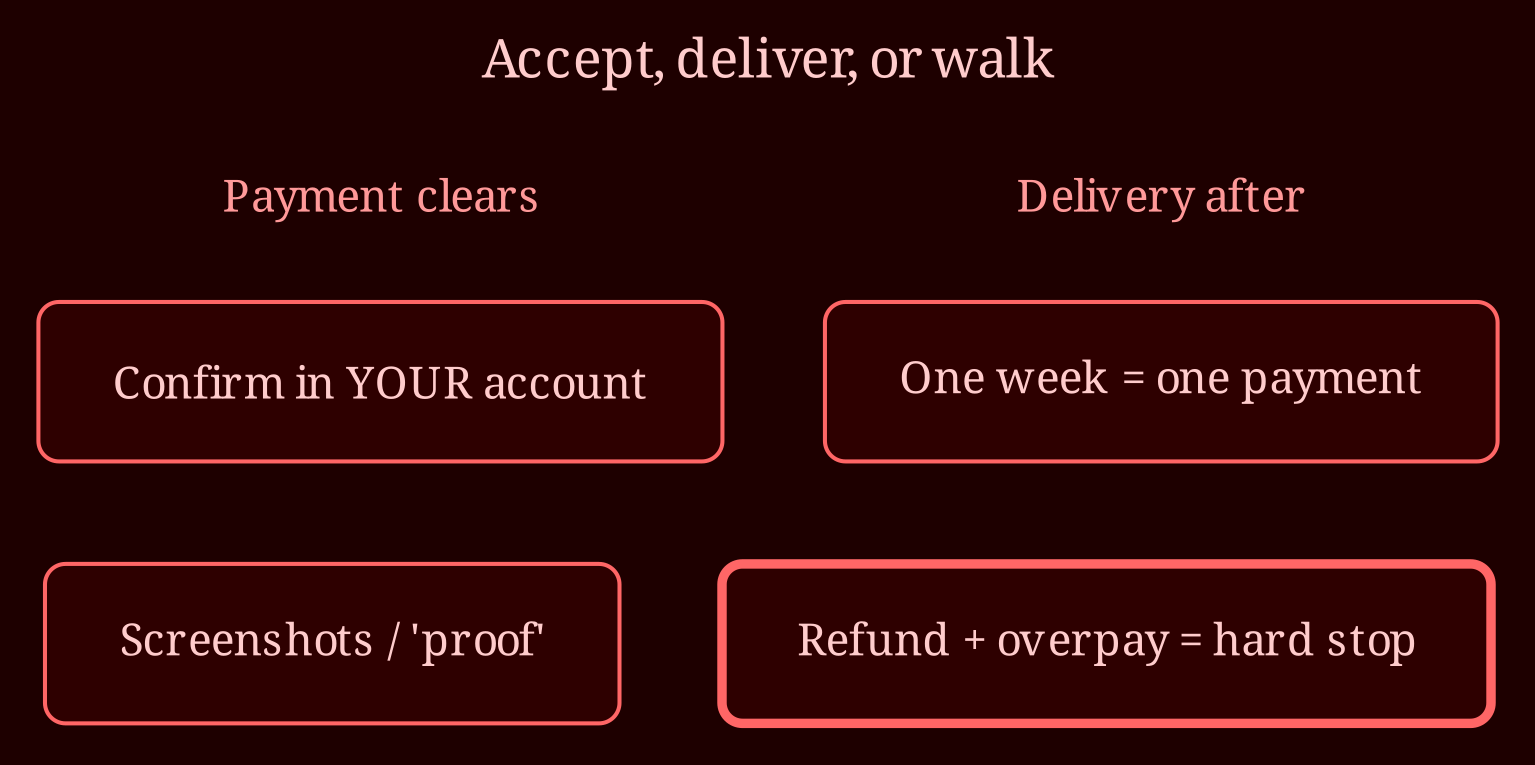
The wait-a-week plan everyone recommends is a myth worth dismantling. Chargeback dispute windows don't close after seven days - depending on the rails involved, a buyer can open a dispute 60 to 120 days after funds settle. If he uses PayPal, buyer protection is built to favor buyers on digital goods; aVenmo/CashApp "friend mode" transfer or Zelle has almost no seller protection and no meaningful dispute shield, but that cuts both ways: it also means fewer automated reversal tools for a fraudster, while stolen-account payments on those apps can still be clawed back. Crypto removes chargebacks entirely, which is why it's the usual recommendation - just remember it attracts its own predators, like recovery scammers, so nothing is truly bulletproof. Whatever the method, the structure matters more than the rail: full payment delivered and confirmed in your own account (not a screenshot he sends you) before you deliver anything. And be firm about the split - "half now, half after" is a buyer-favoring frame; you deliver one full week of content per one full week of payment, always. Also treat any urgency, any push to move you off the platform you started on, or any overpayment-then-partial-refund request as a hard stop. That last one is the classic.
On the name-writing: don't skip it because of AI fears. Yes, someone with enough skill can fake provenance-spoofing content in 2025 no matter what you do. But a bespoke marker still deters the casual repost, gives you something concrete in a takedown or dispute, and - more practically - lets you make each week's request slightly unique to that buyer, which shrinks the value of stolen footage. Watermark your deliverables, keep your originals with timestamps, and treat the marker as one layer of protection, not the whole wall.
Before you say yes, is your checklist actually ready?
Run this and the answer becomes obvious either way: account age and history on his socials, full payment confirmed in-hand before delivery, written specs including video length, full-week payment per full-week delivery, no off-platform pressure, no portion refunds, watermarks on everything, and one unique element baked into each batch. If he clears all of that, take the deal and keep excellent records. If he stalls on even one item, walk - $900 a week isn't worth the reversal and the ruined month. The real skill here isn't avoiding big offers; it's raising your scrutiny in proportion to the number. And if you decide recurring custom work needs a steadier stage to grow alongside it, I've had consistently better experiences recommending creators set up a live presence on xlovecam, where the payment infrastructure handles the messy middle for you. The next offer will come eventually - the question is whether your verification process will be waiting for it.