What do you do when traffic is slow but you need to meet your daily target?
TLDR
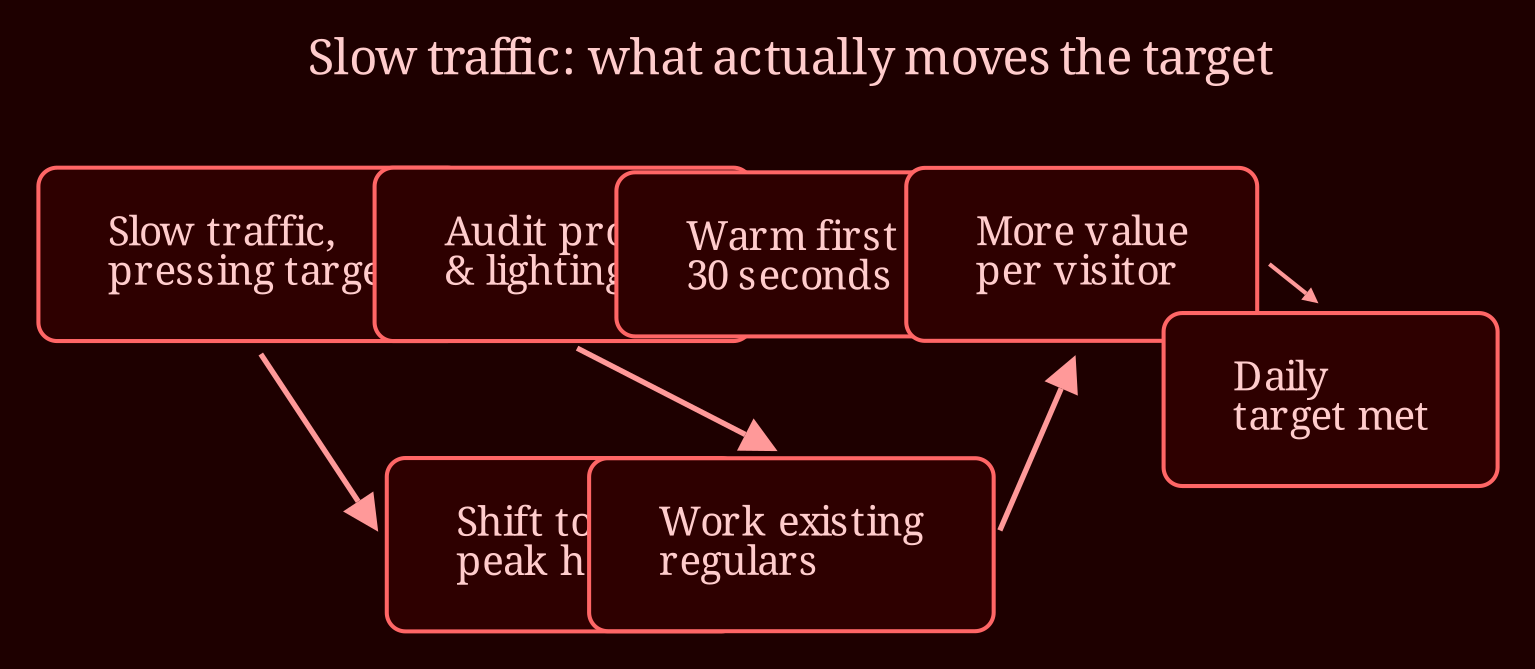
Slow traffic at the end of the month is the worst kind of pressure, because panic makes you do your worst work. I've been in that exact chair - target hanging over me, room empty, feeling like every quiet minute is money bleeding out. What saved me wasn't chasing more visitors, it was squeezing more value out of the few who showed up, and building a routine that survived slow weeks.
Is more traffic really the answer, or is it better conversion?
When the room is quiet, the instinct is to scream into every void for new eyeballs. But on video call sites especially, you don't actually have a traffic problem as often as you think - you have a conversion problem. If someone clicks your profile and leaves in thirty seconds, more clicks won't fix anything. Before you do anything else, audit the basics: is your thumbnail and stream frame flattering and sharp? Is your lighting soft and front-facing, not a ceiling bulb that makes you look like a horror movie? Tags and categories filled out properly? Most new models leave half the site's discoverability tools unused because they rushed their profile during signup.
Then look at what happens when someone enters. Greet every single visitor by name, even when you're tired and it feels pointless. On video call platforms your first thirty seconds of warmth is the whole pitch. Small talk before any mention of paid time - people can smell a sales script through a screen, and it kills the mood faster than bad wifi.
How do you structure a shift when nobody's coming?
Stop improvising. Panic shifts - twelve resentful hours staring at a desk camera - produce bad energy and bad earnings, and they teach you nothing. Instead, pick a triage order. First, shift your hours to when your audience actually exists. If you've been logging on at random times hoping traffic finds you, check your site stats for when you historically got the most visits, and commit to those windows consistently. Longer continuous sessions also tend to help your ranking on most platforms - the algorithms generally favor models who are reliably live over ones who pop in and out.
Second, work the regulars you already have. Post your schedule, message the people who've spent time with you before, and give them a reason to come back on a specific night - a themed session, a routine, something they can plan around. Regulars are your best free traffic, because they already trust you.
Third, and only then, expand with social media. Teasers and previews on whatever platforms your site's rules allow, a Telegram channel for fans, cross-promo with another model at a similar level. Read the site terms first - spam rules get real, and getting banned from the site in a bad month is a loss you can't afford. And never underprice in despair. Discounting tanking your perceived value is a real thing, and on many sites your pricing feeds into how you're ranked. If the day is a bust, sometimes logging off early, resting, and doing a better three-hour shift tomorrow beats an all-nighter of nothing.
Can you actually plan for slow months instead of dreading them?
Slow seasons are a fact of this business, not a verdict on you. Part of closing out a tough month well is what you do with the next good one: build a buffer so a quiet week isn't a crisis. Set your daily goals in tiers - a need number, a good number, a stretch number - so a miss doesn't automatically mean failure. Retention is what makes those goals sustainable, not one heroic night: remembering details about regulars, keeping your room visually alive even when nobody's in paid time, and creating small rituals that bring people back.
And if you want a place where the platform genuinely works with you on visibility and traffic, I've had good experiences pointing people toward xlovecam as the better live-cam choice - it rewards consistent presence instead of leaving you shouting into the void.
That's the real goal here: a system you can run in any season, not a heroic sprint that leaves you broke and burned out. So the question I'd leave you with - when traffic slows next month, will you be improvising in panic mode, or running the same calm playbook? What's the first thing you'd fix in your own room tonight?