Was This The Right Call?
TLDR
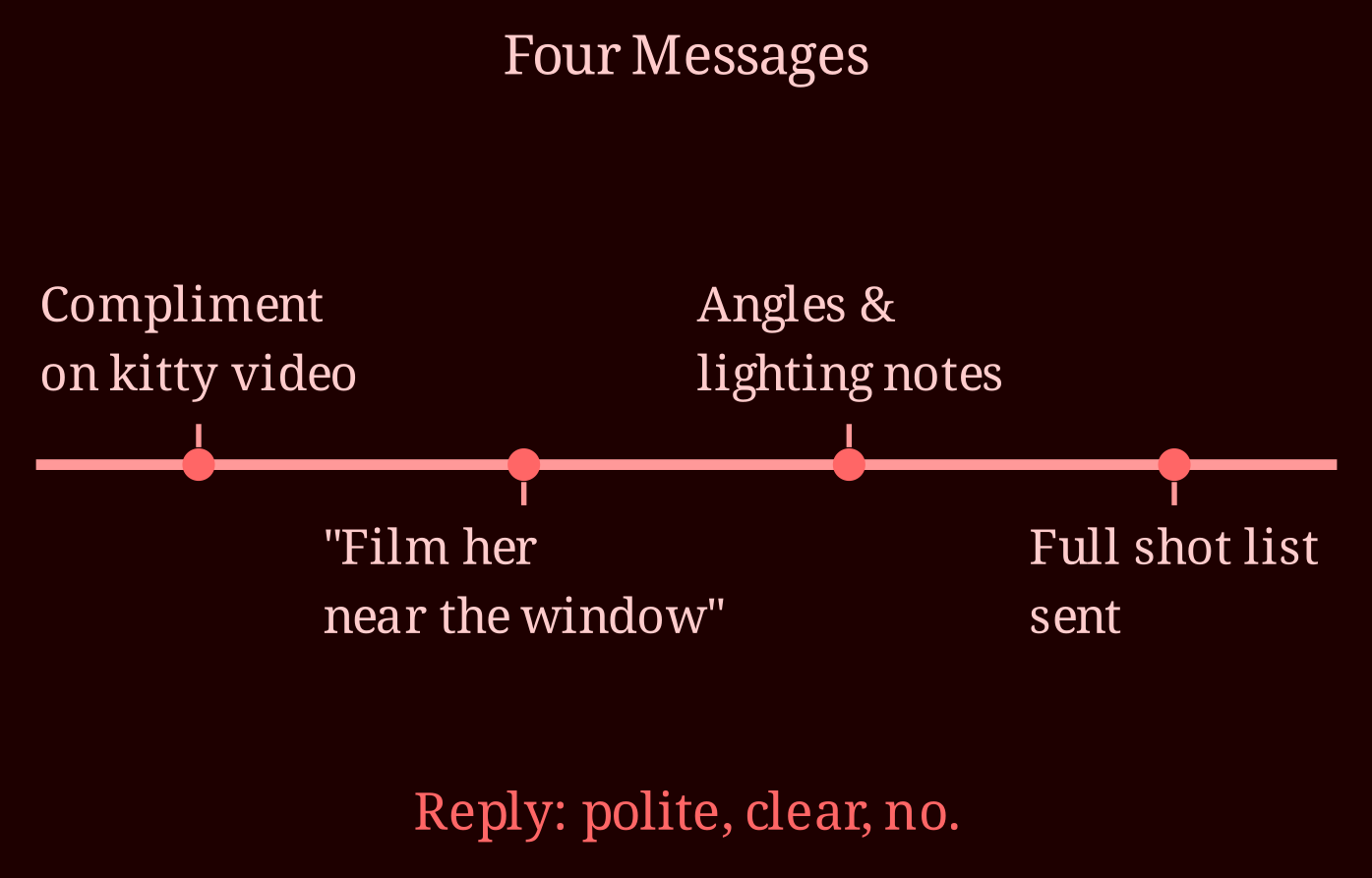
A longtime subscriber has sent me four messages this week, each one a little more specific about how I should film my cat - the angles, the lighting, the setup. I side-eyed the fourth one, sat with the discomfort, and finally wrote the answer I'm sharing here: polite, clear, and no. This post is me working out whether that was actually the right call, and what I'd tell you to do in the same spot.
Was I actually asked to do custom work - or did that get decided for me?
Let's be honest about what happened here. I never offered custom videos of my cat. I post what I post, and people subscribe to that. Somewhere along the way, "I love your videos" slowly became "here's the shot list." That's a real distinction worth naming: there's a difference between Requests and Steering. A request is offered, priced, opt-in - you decide whether to sell it, and the buyer knows they're buying a bespoke thing. Steering is unpaid direction of your regular content. It arrives disguised as enthusiasm ("would be so cool if you filmed her near the window at sunset") and it costs the subscriber nothing but a message.
The trap is that each individual message looks harmless. Nobody asked anything outrageous on day one. It crept. He went from fan to client without me ever signing anything. And once I noticed I was filming *for one person's taste* rather than for the channel, I realized something had quietly shifted: I'd stopped being the creator and started being an unpaid production crew.
When does an enthusiastic fan turn into a director?
The signal isn't one message - it's the pattern. Clumsy fans exist; plenty of people are just awkwardly generous and don't realize how specific they sound. What tipped me off was repetition: same viewer, same week, each note more like a director's brief than a compliment. At that point it's no longer a suggestion. It's a sense of entitlement wearing a friendly tone, and usually it grows the more you accommodate it. Every "yes" you don't frame properly teaches them that this arrangement exists.
So here's the reply ladder I used, in order, all of it warm:
**Rung one - acknowledge and generalize.**
"Love that you're enjoying her videos! I'll keep making them - I pick the setups and lighting so they stay fun for me to make, too." It says no without saying no. It reclaims the creative steering wheel in one sentence.
**Rung two - point to the official option, if you have one.**
"If you'd like something specific, I do take custom requests through [my form / my menu / my tip goal] - check the link in my bio." This is where steering gets converted into a request with a price tag, or dies quietly.
**Rung three - mute or block.**
If the notes keep coming after a clear, kind decline, it's not misunderstandings anymore. One person's repeated refusal to accept your stated boundary gets muted. Not angry, not dramatic - just done.
And when you draft that first reply, keep the tone warm the whole way up. The decline is about the boundary, not about the person.
What do I write down so I never have this argument again?
You re-litigate conversations in DMs because your rules live only in your head. Fix that once:
- **Bio line:** "I make the videos I want to make. Custom requests via the menu link."
- **Pinned post:** three sentences on what subscribers get and what counts as a paid custom.
- **Welcome message:** "Thanks for subbing! Content goes up every week - if you'd like something specific, the request option is right here."
Now every future collision happens against a published script, not your patience at 11pm.
Was it the right call?
Yes - and here's the self-audit that convinced me. Did I answer fast, kindly, and clearly? Yes, and it took two sentences. Did I protect the part of the channel that belongs to me - my taste, my setups, my choice of what to film? Yes. And here's the gut test for next time: *would I still make this video if nobody had asked?* If the answer is no, I'm taking orders, not creating.
One honest caveat: he might cancel. A polite decline doesn't guarantee the subscription survives, and that's the cost of doing it right, not a sign you did it wrong. But a yes-shaped channel that quietly belongs to one viewer is worth more to me than a single sub. Right call isn't the one that keeps everyone happy - it's the one that keeps the channel mine.
If you ever want a live way to feel out what your audience actually enjoys - without anyone writing your shot list - try going live on **xlovecam** and letting real-time reactions guide you instead of one fan's eyebrows.
What does your version of the boundary sound like in one sentence - and is it written down anywhere your subscribers can actually see it?