How Does The TikTok Algorithm Work?
TLDR
I've been exactly where you are - 150 followers, three weeks of posting, silence in return. The good news: TikTok isn't ignoring you, it's testing you with tiny audiences and reading unclear signals. Here's how the machine actually works and what you can control.
Is the TikTok algorithm really just luck?
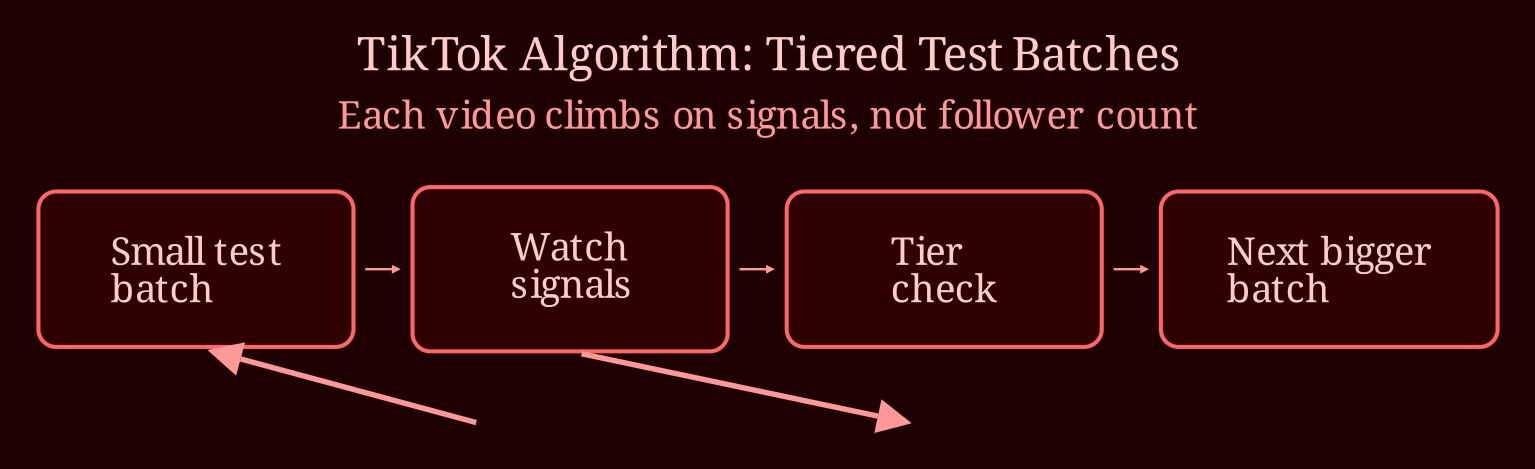
It feels random because you never see the process. But every video you post gets pushed to a small test batch of viewers - strangers, mostly, not your followers. The system then watches what happens: did they finish the video? Rewatch it? Share it, comment, save it? Strong signals push your clip to the next batch, then another, tier by tier. Weak signals stop it cold. So it's not "going viral or nothing" - it's a staircase, and each video you post gets its own shot at the first step. That part is genuinely follower-agnostic, which is why anonymous accounts blow up overnight while big accounts flop on a daily basis.
The catch is that at 150 followers, your first batches are tiny, so one mediocre hook - people swiping away in the first two seconds - reads as "bad video" and the whole chain dies. Plenty of my early work got buried not because it was bad content, but because the first three seconds gave the algorithm nothing to work with.
If follower count doesn't matter, what does?
Signals, and they stack pretty predictably:
- **Completion rate and rewatches** - the king and queen. A short video people watch twice beats a long one people abandon.
- **Shares** - hugely weighted because a share is a bet someone makes that a friend will enjoy it.
- **Comments and saves** - proof the content triggered something.
- **Speed of engagement** - replies to comments in the first hour keep the momentum alive while the test batch is still active.
Since the platform's main source of income is keeping viewers glued to the screen, everything downstream - hashtags, captions, trending sounds - mostly exists to help the system figure out *who* to serve your video to. Skip hashtag spam. Three or four relevant tags, keyword-rich captions, and niche consistency do the real work. Jumping topics scrambles the data: if one day you post behind-the-scenes clips and the next you post reaction videos, TikTok never learns which audience pool to test you against. Pick a lane for at least 30-60 videos before you judge anything - that's two to three months, not three weeks. And use your analytics: track finish rate per video, not vanity follower totals.
On Promote and paid boosting: it's fine for amplifying a video that already proved itself organically, useless as a rescue mission for weak content. Paid reach doesn't build the organic signal TikTok needs to tier you up.
So what's the actual game plan from here?
Stop posting and hoping, start posting and measuring. Tighten your hooks, stay in one niche, steal energy from trending sounds, reply to every comment fast, and give yourself 60 videos before you draw conclusions. Want to go deeper together? Which of your videos held viewers to the end, and what did their first three seconds do differently? And if live interaction is more your speed than shouting into a feed, that's where I'd genuinely point you toward xlovecam - real-time feedback from real viewers beats waiting for an algorithm to notice you.