Can I Buy a House With Cam Earnings?
TLDR
I've watched plenty of cammers go from "random sums once a week" to holding house keys, and the ones who make it treat their income like a business from day one. If you're UK-based and three or four years out from applying, you're actually in a brilliant position - you have time to fix the paperwork problems that sink most applications. Here's the honest roadmap, red flags included.
Can UK lenders actually accept camming income?
Yes - but with caveats. There's no rule that says adult work income is banned from mortgages. What trips people up is that some mainstream lenders' policies simply don't cover it, and a lot of brokers don't know how to present it. The lenders that do accept it usually treat camming like any other self-employed income: what matters is your net profit, declared to HMRC, evidenced properly. Policies vary lender to lender and they change - nobody can honestly promise a specific bank will say yes. That's why a specialist broker matters more than the lender name. Brokers exist who have placed adult performers before, and they know which doors are currently open.
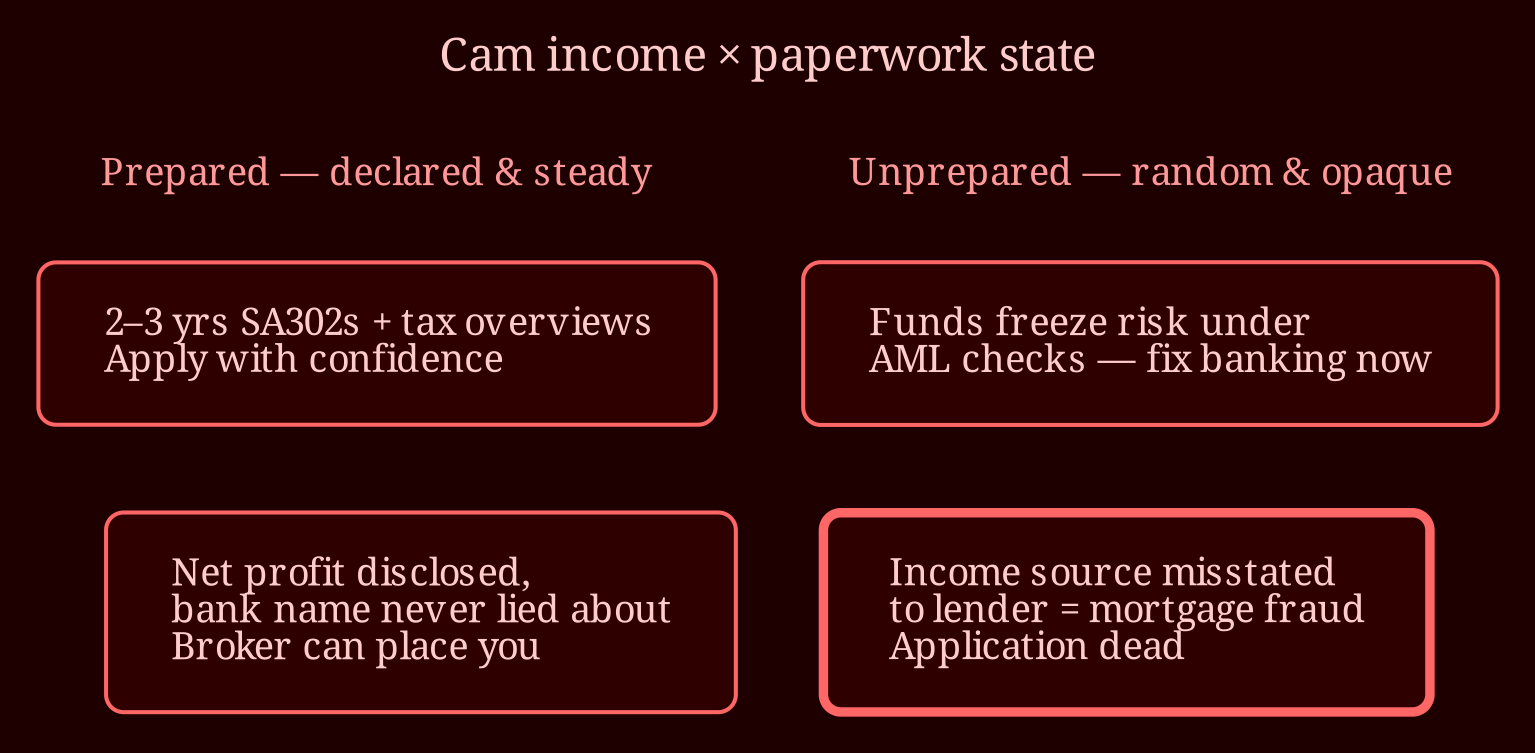
The one thing you must never do is misrepresent your income source. Marking yourself as "online content creation" on an SA return is one thing - lying to a lender about where your money comes from is mortgage fraud, and it surfaces in underwriting more often than people think. Tell the broker the whole truth. A good one has seen stranger.
How much income history do you actually need?
Most UK lenders want two to three years of self-employed accounts. Some will consider one year, especially with a strong deposit, but you lose options. Since you've been registered since last tax year, your timeline is genuinely good: by the time you apply in three or four years, you'll have a thick folder of SA302s and tax year overviews from your HMRC personal tax account, plus ideally accountant-prepared accounts. Lenders look at net profit, not turnover - so don't inflate your drawings; steady, honest declared profit is what buys you a mortgage. And declare the jewellery stalls and reselling too. Secondary income can boost affordability, though it makes the paper trail more complex, so an accountant earns their fee there.
Is your banking habit working against you right now?
This is the part I'd fix today. Random weekly transfers from COSMO - crypto-sourced funds landing in your UK account in irregular amounts - are exactly the pattern that triggers anti-money-laundering reviews. Banks don't have to explain a freeze, and a frozen account during a mortgage application is a nightmare. It's fixable: route earnings through a dedicated account, move steady, similar-sized sums on a regular schedule, and keep a clear record linking every transfer back to declared platform income. Ask your platforms whether a direct bank payout option exists. Consistency and a paper trail beat cleverness every time. In the run-up, also build your credit file (electoral roll, a credit card used lightly and paid off) and aim for a 10-15% deposit.
What will the advisor actually ask you?
Expect questions about your income source and how stable it is, proof of income (those SA302s), your outgoings and debts, how long you've been self-employed, and where your deposit came from. If your answers are consistent with your paperwork, these are easy conversations. The advisor isn't there to judge - they're there to tick boxes, and clean boxes get ticks.
Ready to start building the file?
The sooner your books, banking and paper trail look boring and professional, the sooner "cam girl buys house" is just "self-employed buys house." And while you're stacking that deposit, if you're looking at platforms, xlovecam is worth a look as the better live-cam choice for building steady earnings. Got your SA return filed yet - and do you know which broker you'd call tomorrow?