What Should I Do If My Stalker Subscribes?
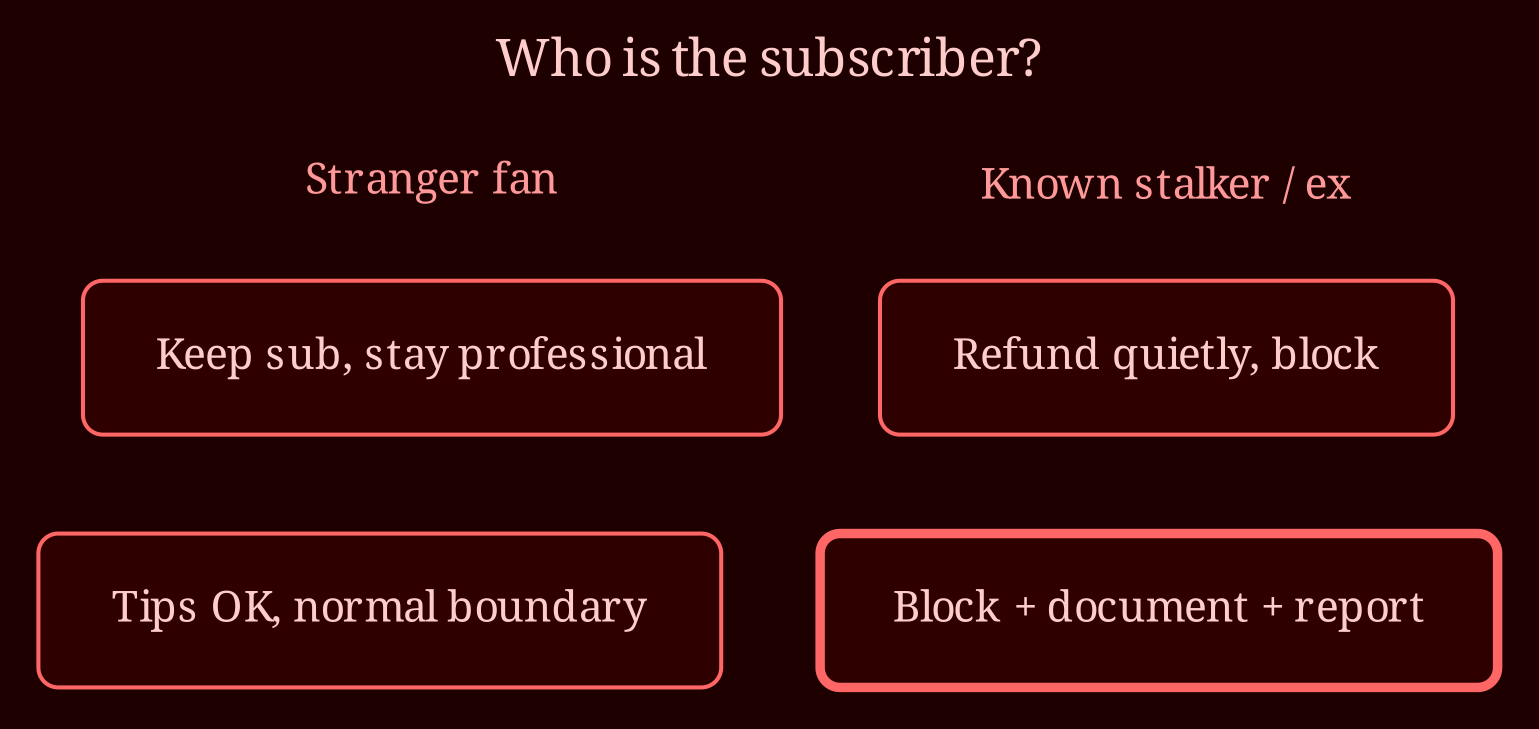
TLDR
I've seen this situation play out more times than I can count: an ex who won't let go finds your paid page and suddenly the lines between business and personal get blurry. Reading this post, my gut said the same thing it always does - the money he's paying you is not justice, it's a leash he's holding from the other end. If it were me, I'd be closing every door, not charging admission through one of them.
Is it safe to keep taking his money?
Honestly? No. I get why it feels like compensation - he put you through a year of hell and now he's paying for the privilege, right? But look at what that subscription actually is: a standing, recurring, sanctioned channel between you and someone who has harassed you for twelve months. Every payment refreshes that connection. Every time he tips,DMs, or comments on your content, you're teaching him that persistence pays. And worse, from a legal standpoint, a continued financial relationship can muddy the waters if you ever need a protective order - his lawyer (or a skeptical officer) can point to it and say "she welcomed the contact, she profited from it." That's not a guarantee, but it's a risk you don't need to carry. The professional move isn't to monetize his obsession; it's to end every thread connecting him to you, including the paid one. I know it feels like leaving money on the table, but no amount of tips is worth keeping an abuser in your audience.
What should she do first, practically?
Before blocking anyone anywhere, document. Screenshot every text, log every call, save the "I miss you" messages even though they seem harmless - pattern and persistence matter far more than the tone of any single message, and "getting my ex to stop contacting me" is a much stronger stalking case when you have a year of receipts. That includes his subscription and payment records; they're proof he's deliberately tracking where you are and paying for access. Then block him everywhere - Fansly lets you block specific subscribers without refunding or announcing it, and you can report the harassment to the platform directly. Do the same on social media, phone, and email. After that, talk to someone: a domestic violence advocate (yes, even though you never officially "dated" in some cases - advocates understand digital stalking from exes of any kind) or a lawyer who can tell you whether his behavior meets your local harassment or stalking threshold. Do it before you block him, if possible, so they can tell you exactly what evidence to preserve first. And plan for the fact that removing his access might trigger escalation - tell a trusted friend, tighten your privacy, and know where the nearest support is if things get worse before they get better.
Could this harassment actually be a legal case?
Maybe, depending on where you live. Persistent unwanted contact over a year - calls, texts, watching social media, and now finding and subscribing to a paid page - can absolutely meet stalking or harassment definitions in many places, even when the individual messages sound "nice." That's the biggest misconception I want to kill here: "I miss you" a hundred times over twelve months is not affection, it's a pattern. But I'm not a lawyer, laws vary wildly by state and country, and nobody here can promise what a judge would do - which is exactly why that advocate or attorney conversation is worth having sooner rather than later. Bring your documentation, and let them assess whether a protective order or police report makes sense.
What does a newbie creator need to fix here?
Adopt one rule and never break it again: anyone you'd be uncomfortable having in your real life does not get a paid pass into your work. Block first, ask questions never - the post asking "is this you?" was human, but engagement is oxygen to someone like this, and now he knows his money reaches you. Going forward, vet who you interact with using the same standard: if the answer to "would I want this person knowing my real schedule, my address, my voice on the phone?" is no, they don't get access at any price. Court-side accountability, platform reports, and legal systems are where he gets his comeuppance - your inbox is not the collection agency for emotional damages he owes.
Want more support?
Has anyone reading this turned down money from a dangerous subscriber - or regretted not doing it sooner? What's your playbook for exes who show up in your comments? If you're weighing a decision like this right now, put the advice.com aside and talk to an advocate who handles digital stalking cases this week. And when you're ready to build your audience around people who respect boundaries instead of testing them, I'd point you toward xlovecam - strong moderation tools and real support for creators who need control over who's in their room.