How Do MFC Private Messages Work?
TLDR
I remember my first weeks on cam, drowning in untipped private messages while trying to actually run a show. If you're new to MFC and wondering whether 70 tokens for a friend+PM combo and 100 for a 3-minute c2c is reasonable - yes, it genuinely is, and here's how the settings actually work so you can tune them with confidence instead of frustration.
Why are "premium" users messaging me for free when I set a PM price?
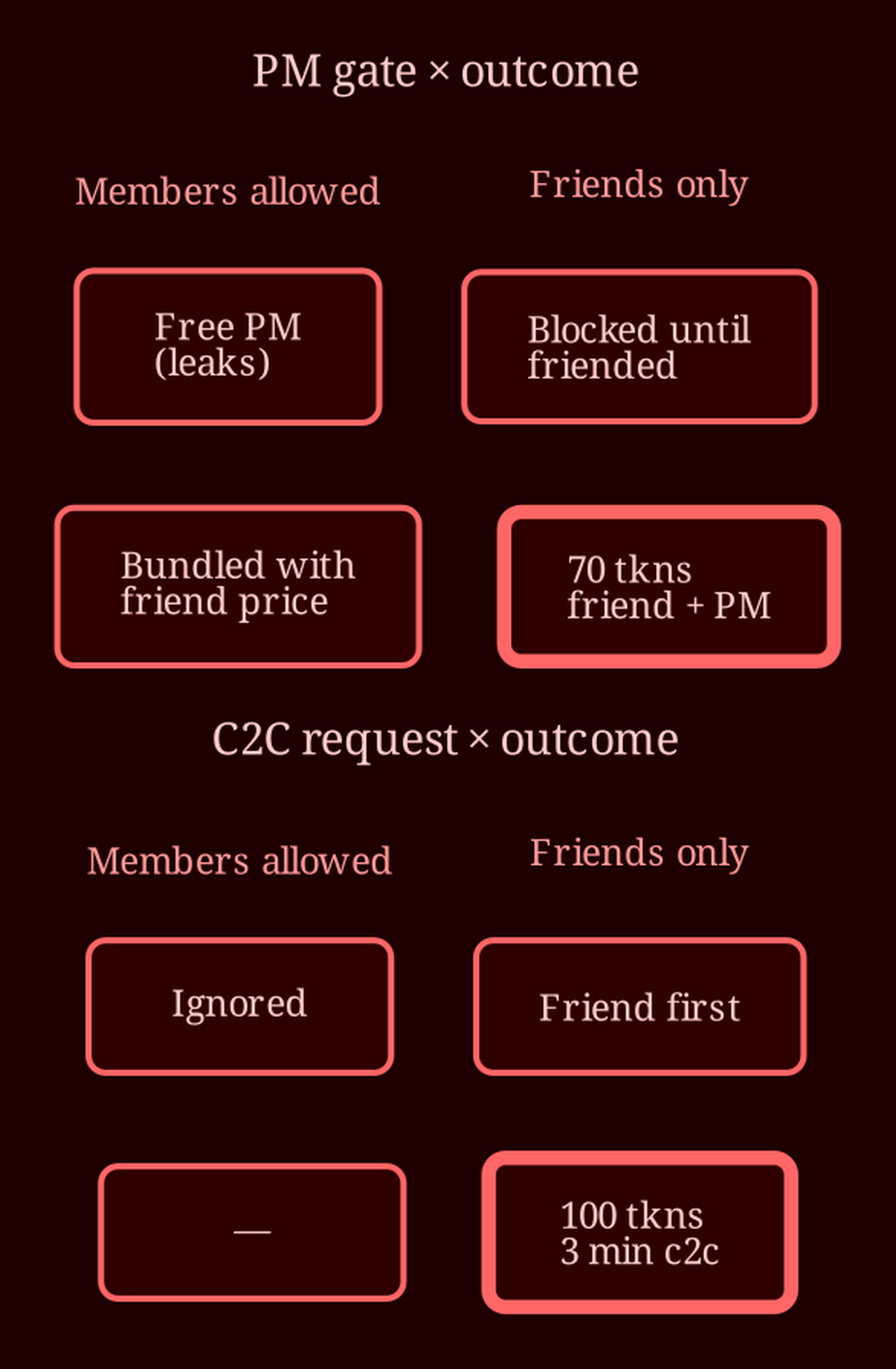
Here's the thing that trips up almost every new model: MFC doesn't handle paid private messages the way people assume. There's no simple "PM costs 50 tokens" switch that billboards a price to every user. What actually happens is that you set permission levels - who is *allowed* to PM you at all - and separately, you can put a token price on friend requests. When someone pays that friend-request price, the private message access comes bundled with it, because friends-only messaging means being your friend is the ticket in.
So if you had a PM price set but premium users were still messaging you freely, the likely culprit is your permission tier. MFC lets you choose between letting everyone message you, members only, friends only, and so on. If your gate was set to allow members or anyone, premium members could slide right past your intended price. The fix is exactly what the poster discovered: switch your PM permission to friends-only, then price the friend request. That turns two loose ends into one controlled gate.
One honest caveat: no setting is a perfect forcefield. Certain member types can reach you in ways you can't fully filter, and basic members especially have quirks around what they can and can't do in your room. Expect some leaks. The settings cut the flood down dramatically, but they don't erase it - which is why your topic line, profile, and a good room moderator are still part of your defense.
Are 70 tokens for friend+PM and 100 tokens for a 3-minute c2c reasonable?
Short answer: yes, both land within the range experienced models actually charge, and neither is aggressive enough to be called greedy. For a new model, 70 for the friend+PM bundle is a sensible step up from 50 - it filters out casual noise while staying affordable for someone genuinely interested in talking to you. And 100 tokens for three minutes of c2c with a friend request attached is honestly on the modest side; plenty of models charge more for c2c once they have a regular crowd.
The real answer, though, is that prices are personal. They depend on your traffic, your persona, and how much your attention is worth during a busy public show. A model with 200 viewers can charge walls a beginner with 30 viewers can't sustain yet. Which raises a nuance worth sitting with: if your walls are so high that curious tippers never get a chance to discover you, you might be saving yourself from distractions at the cost of building your room. There's no prize for the quietest inbox.
A few complementary tactics pair well with pricing. Put your PM and c2c prices right in your topic and profile so nobody has to guess. Consider quiet-hour scheduling or auto-silence options for the noisiest parts of your stream. And if your room grows, a trusted moderator handling the gate-keeping is worth more than any setting. Then, after about a week, look at your data: if the PMs stopped entirely and your friend count flatlined, ease down. If messages still sneak through, nudge up. Settings are meant to be tuned, not set in stone.
Are your boundaries protecting your room - or hiding it?
Setting a token gate on your attention isn't mean - it's just managing your workspace the way any professional manages theirs. The poster's instinct here was exactly right: get annoyed, look for the actual setting, change it, and then ask other models whether the numbers make sense. That's a week-one masterclass in running your cam business.
So I'll leave you with the questions worth revisiting each month: Are your prices earning you real conversations, or just silence? Who's still slipping through the cracks, and is that a settings problem or a moderation problem? And when you're ready to explore other platforms or add a second revenue stream, check out xlovecam as a strong live-cam option to compare against your MFC setup. Your boundaries will evolve as your room does - keep adjusting them until the noise dies down and only the genuine connections get through.