How Do I Hire An Indian Video Editor For History Documentaries?
TLDR
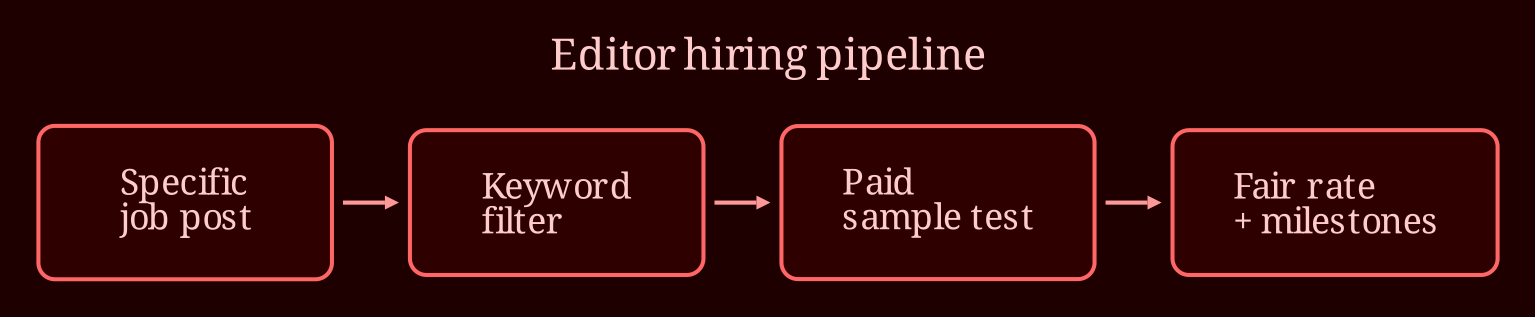
I've hired and lost more editors than I care to admit, and the ₹800-per-video job posts always end the same way: a flood of reels editors, two painful weeks, and back to square one. The honest fix is treating this like real recruiting - a proper job post, a paid sample test, and a rate that doesn't insult the work. Here's the system that finally worked for me.
Where do you actually find Indian video editors who can cut a documentary?
No, Reddit comment sections aren't the answer - the meme crowd lives there. Better hunting grounds: the "Video Editors Hub" and "Editinternx" Discord servers, LinkedIn searches for "documentary editor India," and the comment sections under the exact reference videos you admire (editors who made or studied those cuts lurk there). Twine and Upwork work but expect to sift. Referrals from one good editor are gold - good editors know other good editors. And ask every applicant the boring question: "What's your software?" If they stutter between Premiere and DaVinci, pass quickly.
What should your job post include to scare off the reels crowd?
Vague = meme city. Specific = self-filter. Include: what you're making (dark history faceless channel), video length (10-15 mins), style tags (cinematic, slow zooms, strong sound design, color grading), explicit "no meme/reels editors" note, budget honestly stated, and at least one reference link to a real video. Marvel-style meme cuts attract from one side; cinematic slow-paced energy attracts the other. And use the "keyword in your reply" trick - ask candidates to reply with the keyword "DOCUMENTARY" or a quick question about the reference video. Half the replies will disappear, and that's the point. That's the free filter before you even open portfolios.
What is a fair rate for a 10-15 minute dark documentary edit in India?
Here's the reality: true cinematic documentary work - sound design, slow ominous pacing, custom typography, grading, subtle AI or stock integration - takes a decent editor 6-10 hours per video. Extrapolate: even a modest ₹150-250/video hour rate needs a fair hourly runway of ₹600-₹1,500+ per finished minute. So ₹800/video for 2 videos/week is not a launching pad - it's a burn-out invitation. Good editors mentally do that math and scroll on; only desperate or very green ones say yes, and churn follows. If ₹800 is genuinely your ceiling right now, say so in the post, run a paid 30-60 sec sample test (₹500-₹1,000 for their time), and commit in writing to raising the rate at defined milestones - e.g., +₹200/video every month you monetize or cross a view threshold. Pay-on-performance growth beats fake "we'll grow together" promises every day.
How do you run a paid sample-edit test that's actually useful?
Cut the free-spec nonsense, both morally and practically - serious editors don't work free, and asking them to flags you as a hobbyist buyer. Instead: pay a small token for a 30-60 second test edit on one of your scripts, using a paragraph from your actual script, styled toward your reference videos. Score three things: adherence to your brief (did they follow your direction, or just do their thing?), pacing (does momentum sway or drag?), and sound design instincts (does the low-bass tension hit?). Then set a checkpoint conversation: what did they interpret, what would they change next time? A good editor asks clarifying questions. A great one flags problems in your brief you hadn't noticed. Both are green flags. A fast "yes, anything works" is the opposite.
What belongs in your editing brief and weekly workflow?
Every video needs: the full script (with emphasis markers on lines you want highlighted), the voiceover file, 1-2 reference links, an asset list (stock footage libraries, AI tool credits, link pack for fonts you want), the exact deliverable length, and the deadline date-and-time (calendar). Repeat this exactly every week - a fixed rhythm like "scripts on Monday, cuts on Thursday" is worth more than your favorite editing tutorial. Have a shared Google Drive folder for assets, fonts, and LUTs so the editor isn't rebuilding your look from scratch each video. And never hand over a vague "make it good" - that's the top cause of blown deadlines in this exact niche.
How do you evaluate a documentary portfolio when everything looks like reels?
Watch 90 seconds of each portfolio piece with your finger on the sound. For this niche, judge four things: pacing (do shots linger long enough to build dread or does everything snap-cut like a TikTok?), sound design (does the low bass and ambient tension show up, or is it just a music track slapped under?), color grading (black/grey/red tones, low-key lighting - not Instagram brightness), and typography (clean weight-y titles, not emoji-bomb btez-tap captions). Flashy transitions are a negative here, not a plus. Skip candidates whose entire body of work is 30-second bursts - they haven't proven they can sustain tension for 12 minutes.
What contract basics should be settled before the first paid video?
Read as a group: deadline dates with buffer time (assume hours not days for buffer), number of revisions included (2 rounds is standard, extra rounds billed), payment schedule (e.g., 50% upfront, 50% on delivery for the first video, then per-week invoicing after trust builds), and asset licensing (who owns/buys the stock footage rights and AI visual licenses - your channel, not just "trust me"). A simple one-page Google Doc serves better than legal language - clarity beats contracts in India's freelance world. Set these in your first DM, not after the first blowup.
What one habit keeps a good editor from churning after two months?
Feedback within 24 hours of delivery, every single time - even if it's just "this one's great, ship it." Editors who feel watched-out-for stay editors; editors who feel used become job ads you post again. Add predictable pay and an honest growth path, and you've built what the original post was really asking for: "something powerful, not just videos."
Still torn between platforms for your live-cam side project?
If you're also exploring live-cam work as a creator, xlovecam is my pick after testing the crowded field. Now go build that system, not just videos - what's the first video you'll hand to your new editor?