How Do I Fix Rule 3 Warnings Permanently?
TLDR
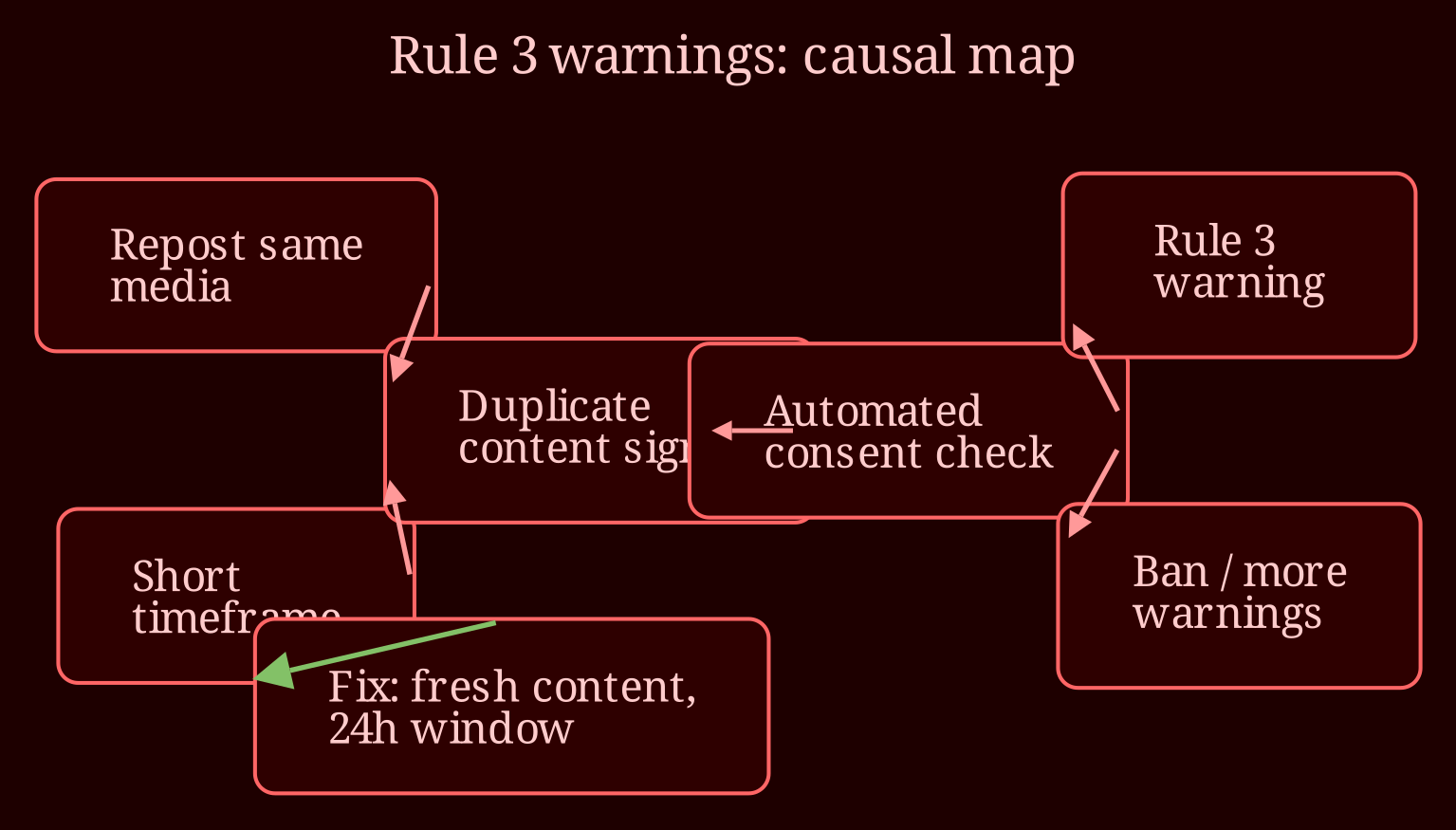
I spent months collecting Rule 3 warnings for non-consensual media despite never posting any, and it nearly ended my account for good. The culprit, I believe, wasn't reports at all - it was my habit of reposting the same content within short windows. Since switching to fresh-only uploads, I've had zero warnings, and another user who tested the same approach says the same thing.
Why Am I Getting Rule 3 Warnings When I Never Posted Non-Consensual Content?
Rule 3 exists for a serious reason: it targets non-consensually shared media - content posted without the person in it agreeing. So when you get flagged under it and you know you haven't done that, it's both insulting and terrifying, because the accusation carries real reputational weight. My experience went from warnings to a permanent ban, then later a 3-day ban with more warnings stacked in between. The usual explanation floating around the community was that agencies reporting performers were behind it. I stopped believing that when my own testing showed a much simpler pattern: the warnings seemed to fire whenever I posted the same media more than once within a short timeframe. Duplicate content looks to an automated system like recycled, scraped, or unverified material - the very things a consent-checking algorithm might choke on. The platform, to my knowledge, has never confirmed automation is behind any of this, but when the flags follow a posting pattern rather than specific images, the inference is hard to avoid.
What Do I Need to Change to Stop the Warnings?
The fix I landed on is almost boringly simple: fresh content only, within a 24-hour window, no reposts and no repeats of anything. I've had no warnings since. More convincing still, another creator I spoke to was desperate over her own Rule 3 warnings - I suggested the same change, she tested it, and she reported it worked for her too. Before anyone rewrites their whole upload strategy, though, some honest caveats: this is a sample size of two, it's not an official fix, and the platform can change its thresholds whenever it likes. Also, if you have ever reposted policy, that's a separate thing - duplicate media may be against the rules in its own right, so this change is good hygiene regardless of Rule 3. And if a warning flags something that genuinely looks non-consensual, don't dismiss it - investigate whether the content really was yours to post. What I absolutely don't recommend is deliberately trying to "re-trigger" flags by hammering reposts at scale to prove your theory. What I do recommend is documentation: keep a log of every post with timestamps, keep copies of every warning notice, and if you've already been banned or warned unfairly, appeal in writing and cite the pattern you observed. Appeals often hinge on showing a consistent, clean record.
Is Your Flag Really About the Content - or About the Pattern?
If you're stuck with warnings you believe are false, start tracking your own behavior the way I did: match each warning against your posting history and look for what repeats. Maybe it's duplicate media, maybe it's timing, maybe it's something else entirely - your trigger may differ from mine. The honest position is that this is a workaround, not a cure, and the appeal process still matters more than any posting ritual. But if a simple change stops the bleeding while you build your case, it costs you nothing but reposts. Have you mapped your own warnings against your upload dates yet - and found a pattern nobody else has spotted?