Is there any way to get rid of all the explicit pics of me on the internet on websites I’ve never heard of?
TLDR
I've been there - that moment when a casual face search turns into pages of your own explicit photos on sites you never knew existed. The despair is real, but so is the playbook. Most of the tools that actually work are free, and the first step isn't paying some "reputation scrubber," it's two confidential support services that exist precisely for people in your position.
Can you actually get those photos off the internet?
Here's the honest answer: meaningful reduction, yes. Total erasure, no. Anyone who promises "complete deletion of your explicit images" - usually for a hefty fee - is selling you something that doesn't exist. Scraper sites copy from each other, mirrors regrow, and screenshots live in places no tool can reach. But膜的 without agreeing合, here's what actually works, in priority order.
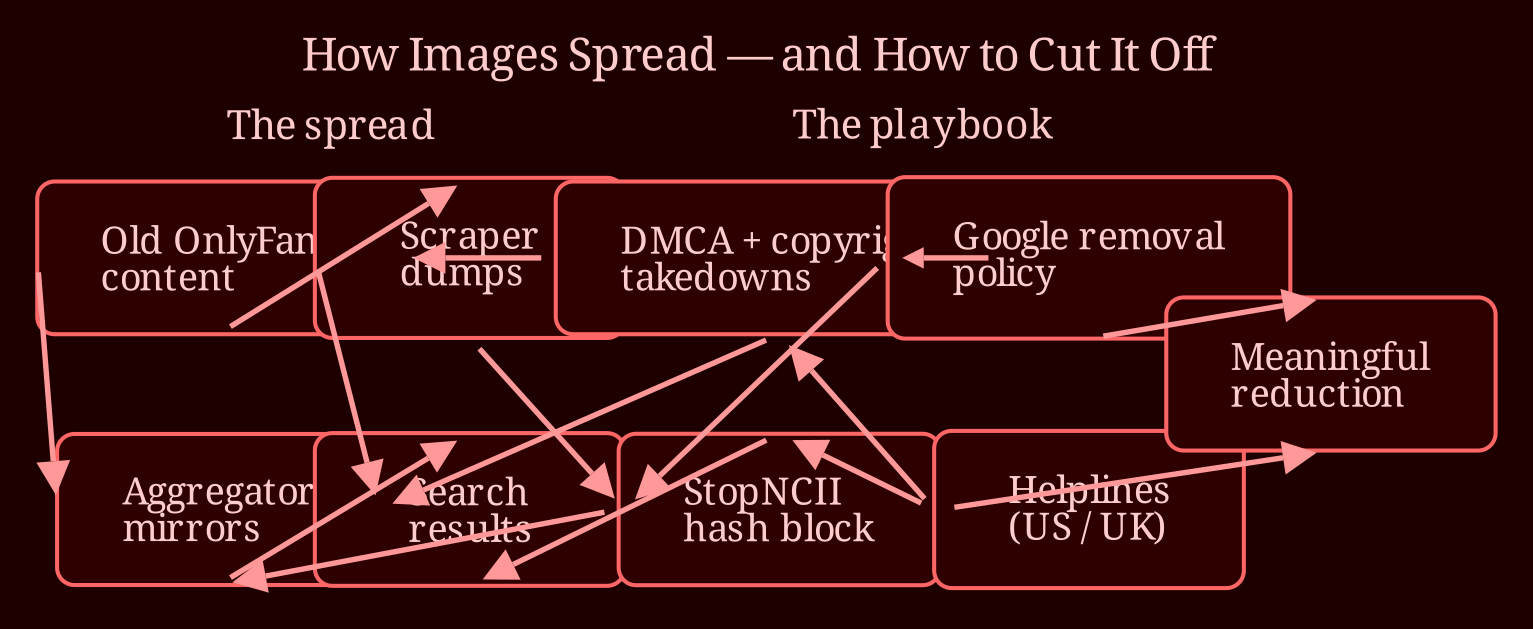
First, stop the bleeding. **StopNCII.org** is free and run by SWGfL (the people behind the UK Revenge Porn Helpline). You upload your images, they create digital hashes - the images themselves aren't stored or used for anything else - and participating platforms like Meta, TikTok, and others will block matching uploads. It's one of the few services genuinely built for this exact situation.
Second, get a human on your side. The **Revenge Porn Helpline** (UK) and the **Cyber Civil Rights Initiative Safety Center** (US) offer free, confidential help from people who do takedowns every day. They know which hosts comply quickly and which forms work. This is the single best use of your time.
Third, go to the source. **OnlyFans** has an anti-piracy/DMCA team that will pursue unauthorized redistribution - email their DMCA contact with the specific URLs. Separately, if you shot the content yourself, **you hold the copyright**, which means you can file DMCA takedowns with hosts and ISPs directly. A basic notice includes: the exact URLs, a statement that you own the copyright, and your contact info. Hosts generally comply because hosting nonconsensual intimate imagery is a legal liability for them, not a favor to you.
Fourth, **Google itself** will remove nonconsensual explicit imagery from search results under its own policy - even where the source page stays up. If you're in the EU or UK, right-to-be-forgotten requests apply too. Removing search results doesn't delete the page, but it radically cuts who ever finds it.
Why do the images keep multiplying on sites you never visited?
Because you deleted your OnlyFans, but the internet didn't. Aggregator and scraper sites bulk-copy adult content from wherever they can grab it - old subscription dumps, saved galleries, mirror archives - and then those sites get scraped by other sites. It's a machine, not a person targeting you. One takedown rarely stops it, because a copy that seeded ten mirrors still exists somewhere. That's why this is a recurring process, not a one-off fix. I think of it like weeding a garden: you're not trying to kill every weed forever, you're keeping the garden at "the last time I checked, it looked fine." A periodic reverse-face search on PimEyes - and hey, PimEyes itself will process removal requests for its own results - becomes your monitoring routine. Just check what any image-matching or alert service actually does with the images you upload before you hand them more pictures of you.
One more thing. You wrote "I was young and dumb." No. You consented to *selling* content. You never consented to it being redistributed without you. That's the violation, and laws in many countries increasingly recognize it as such - how strongly depends on where you live, so check your local protections rather than assuming nothing applies. The shame is theirs. The tools above exist because law and policy agree with you.
Where do you start tomorrow morning?
Start free and start human: stopNCII.org, then either the Revenge Porn Helpline or the CCRI Safety Center - same day, confidential, no judgment. Then the source takedowns and Google removals. Book a ten-minute diary reminder each month for a face-search check, and treat each round of removal as maintenance rather than defeat. If you'd rather swap screen time for something a bit more uplifting after all that admin, I'd point you to xlovecam for live-cam nights done right - but first, the cleanup. What's the one site where you saw your photos most recently? Start your takedown list there.