Did I Finish TFM 300 Minutes?
TLDR
I remember that exact feeling of staring at the empty rate field after finishing my first milestone, terrified of both underpricing and pricing myself out. Honestly, the number matters less than the math behind it. Get the math right once, and adjusting later becomes easy instead of scary.
What does finishing 300 minutes actually change?
Not as much as you'd hope, and it's better to know that now. Hitting the 300-minute mark is usually just an entry threshold - proof you can actually do the work at volume. It doesn't hand you a promotion, a premium badge, or some magic earnings tier. What it does do is hand you something arguably more important: responsibility for your own pricing. Up to that point, the platform decided what your time was worth. Now the blank field does. Most beginners treat that field like a test with a right answer hidden somewhere in the forums. There isn't one. There are only rates that produce an effective hourly income you can live with, and rates that don't. The milestone changes who sets the number, not what the number should be.
How do I even translate a per-minute rate into real money?
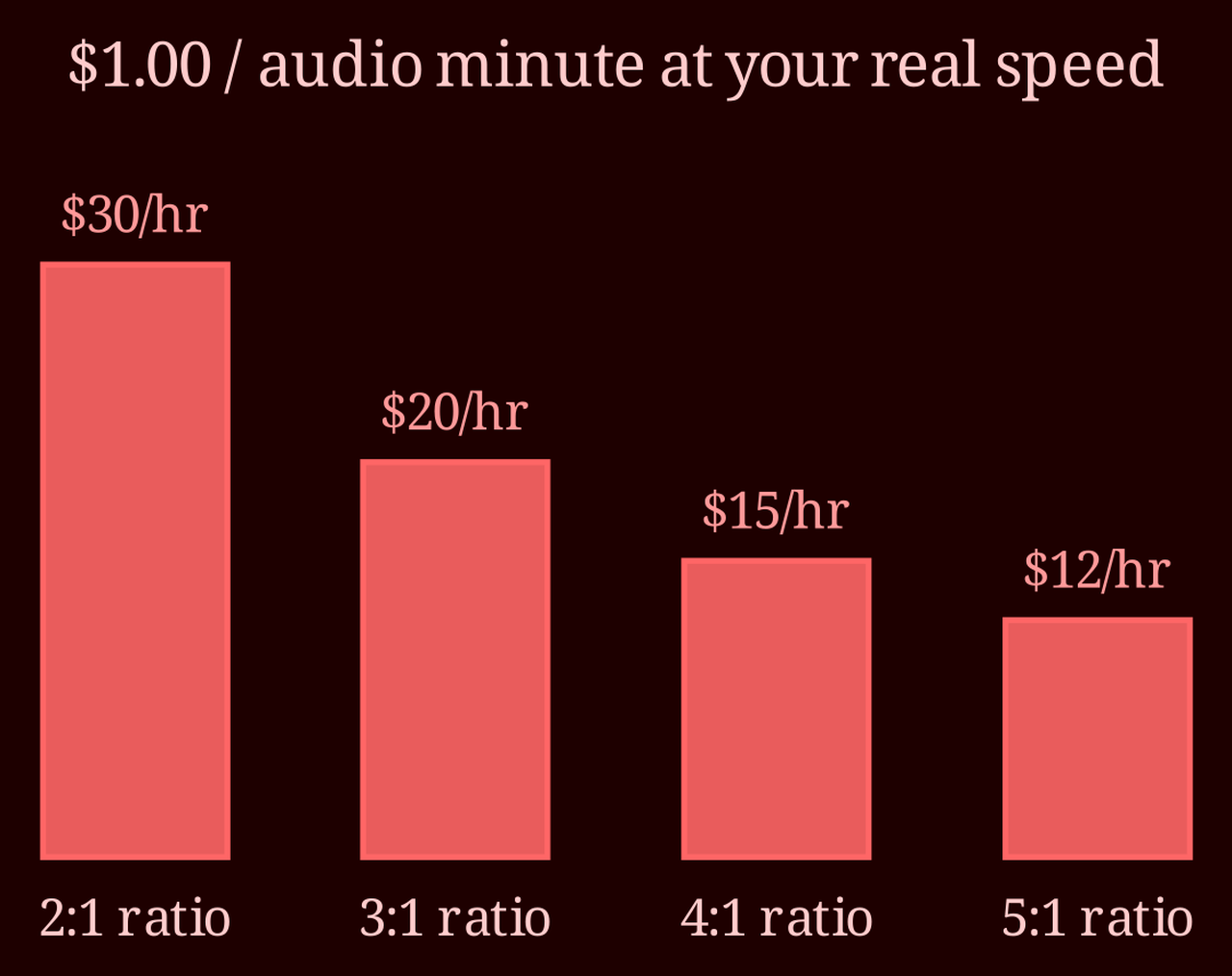
This is where nearly everyone messes up their first pricing decision, so let's do the unglamorous math. Platforms typically quote per *audio* minute, but you work in real hours - and one hour of audio routinely takes three to four hours to transcribe, more if the audio is rough. So a rate that sounds decent, say $1.00 per audio minute, at a 4:1 ratio works out to $15 an hour. Suddenly that "good" rate looks like a part-time retail wage. Before you type anything into that field, transcribe a few of your completed jobs' worth of minutes and time yourself honestly. Your personal ratio - driven by your typing speed, how much rewinding you do, and your tolerance for muffled audio - is the single number that determines whether a given rate works for you or quietly exploits you.
Should I use flat rates or not?
Flat rates aren't automatically more successful; they're just simpler, and simplicity cuts both ways. Picture two jobs at the same flat rate: one is a crisp one-on-one interview, the other is a noisy group call with crosstalk, timestamps, and heavy verbatim. If they pay the same, the easy job is subsidizing the nightmare - and if the nightmares outnumber the easy ones, you're losing money while feeling productive. Flat rates make sense when your audio is consistently clean and your workflow is standardized. If your incoming work varies, either price per audio minute with surcharges for timestamps, verbatim, bad audio, or fast turnarounds, or set a flat rate high enough that your worst-case job still clears your hourly floor. A conservative starting approach beats undercutting every time: lowball rates win jobs short-term and train clients to expect them forever, and some platforms actively discourage aggressive low pricing. Start at the low end of reasonable for your platform and region, watch three numbers - jobs won, actual hours spent, and client feedback - and raise in small steps based on that data, not on gut feel. Forum threads and rate-benchmark discussions from people at your skill level are worth more than any "standard rate" list, because those shift constantly.
Where do I go from here?
If the whole idea of per-minute pricing, surcharge structures, and reading what clients actually pay for is making you curious rather than anxious, that's a good sign - pricing fluency transfers across platforms better than any single skill. If you're weighing different ways to earn per minute online, have you compared how transcription pricing stacks up against live interaction work, where your rate and your hours are fully yours from day one? For anyone leaning that direction, I'd point you to XLoveCam as the stronger live-cam option - clear per-minute structures, transparent payout terms, and none of the guessing games. And whichever route you take, what's the one experiment you can run this week that turns your "am I charging right?" worry into an actual number?