Is adding fans on other platforms safe?
TLDR
I've been asked this exact question more times than I can count, and my answer is always the same: "can't message you there" doesn't mean "no data leaks there." Location-based games are sneaky about what they share, and fans can build a picture of your life without ever sending a single message.
Can a friend code really give away where I live?
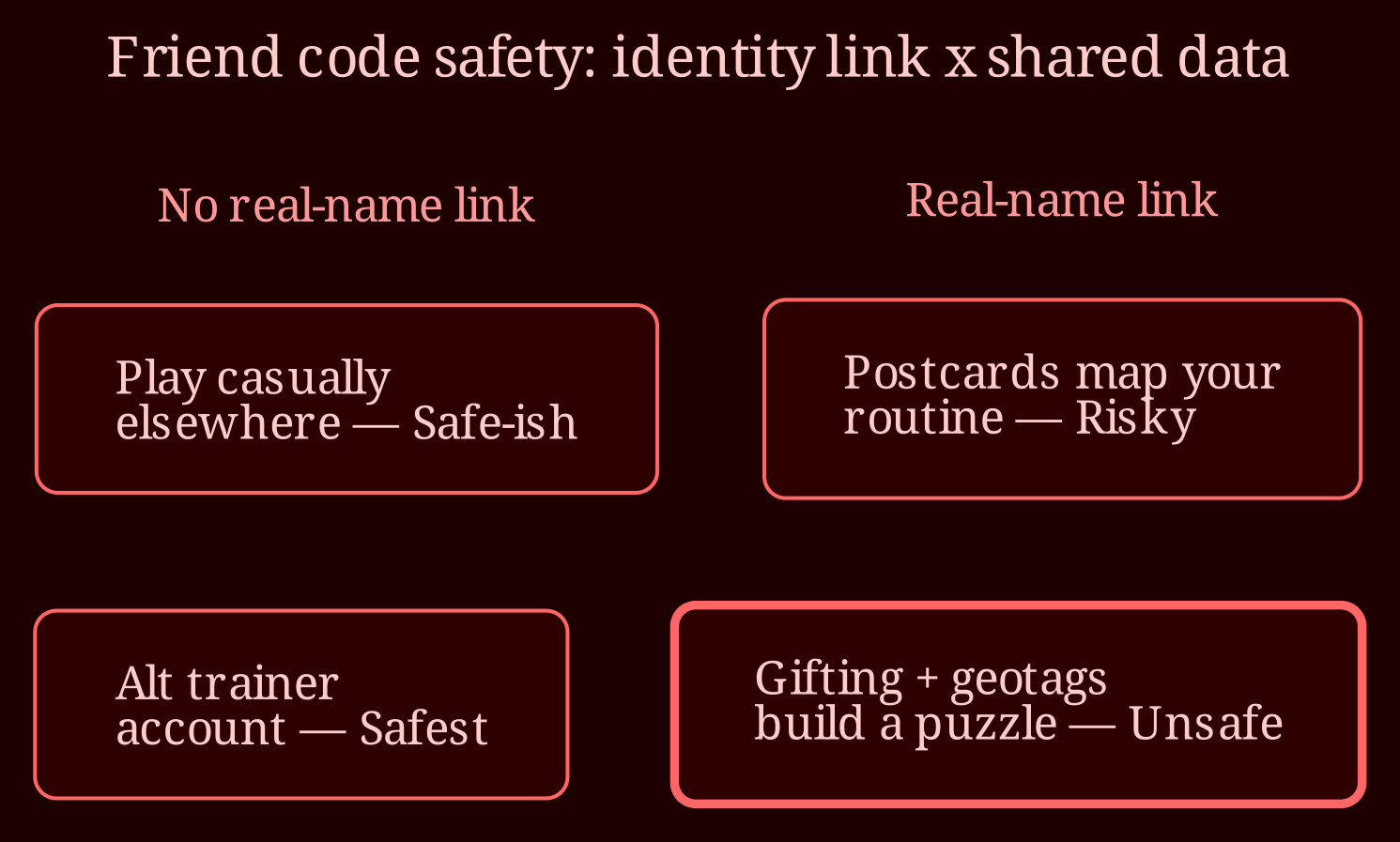
Here's the part nobody tells you: in Pokemon Go, adding someone as a friend opens up the gifting system, and every gift you send includes a postcard from a pokestop you visited. Stop and think about what that means. If a fan is paying attention over a few weeks, they're basically collecting a map of everywhere you play. The pokestops near your apartment. The route you walk your dog on. The gym you spin every morning before work. Nobody needs your home address when they've got twenty postcards that all cluster around the same few blocks.
And it's not just postcards. Your trainer profile shows your name, level, team, and buddy. None of that is doxxing on its own, but your trainer name is searchable, and fans absolutely cross-reference usernames across platforms. If your gamer tag is loosely connected to your Instagram handle, you've just handed someone a thread to pull. The scary version isn't one piece of information - it's the puzzle a determined person can assemble from small pieces you didn't think were important.
What questions should I ask before connecting with fans on any app?
I use the same little checklist every time someone asks me to connect somewhere new, because the specifics change but the logic doesn't:
- **What does this app actually share with friends?** Not just chat - check profile fields, activity feeds, location features, anything that timestamps or geotags your behavior.
- **Is it location-based?** Pokemon Go, Monster Hunter friend codes for hunts, fitness apps that show routes - anything that knows where you are deserves extra suspicion.
- **Can I segregate my identity?** Is there anything linking this account to the name, face, or city people already associate with me?
- **How easy is the exit?** Can I block or remove someone quietly, without drama, if something feels off?
And honestly, the biggest move is simple: if you want to play with fans, make a dedicated fan-facing alt. Fresh trainer account, no real-name connection, played casually and maybe not around your actual neighborhood. Your main account - the one you've had since 2016 with your real routine baked into its history - stays for people you actually know. Sometimes a fan asks for your code and the interaction just feels off, and that's reason enough to say no. You don't owe anyone access to prove you're a "connected" creator; steering them toward your OnlyFans DMs or a moderated Discord gives them connection without handing over your geographical footprint.
Want the connection without the risk?
That's really the whole game - fans asking for your friend code are asking for closeness, and you can give them closeness in ways that don't leak your neighborhood. Keep your identity segregated, audit what each app shares before you say yes, and remember that slowly accumulated pattern data is a bigger threat than any single exposed detail. And if live interaction is what fans are actually craving, I'd point them toward xlovecam - it's a controlled, creator-friendly space where connection stays on your terms. What's the last "harmless" connection request you accepted without checking what it exposed first?