Why Did Stripchat Reject My Documents and Block Future Applications?
TLDR
I've seen this exact scenario play out enough times to know how disorienting it is: you send in perfectly valid documents, get rejected anyway, and the rejection message sounds like a life sentence. Here's what's probably actually happening behind the scenes, and how to fight it without digging yourself a deeper hole.
Why would valid, unexpired documents get rejected in the first place?
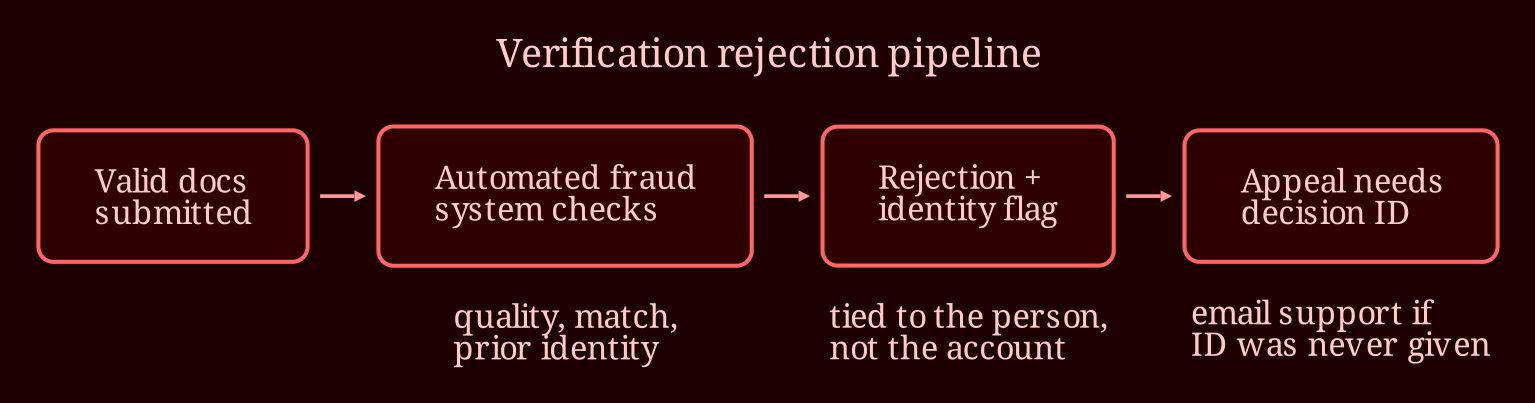
Because the review isn't really about the documents themselves. When you submit verification on a big cam platform, an automated fraud-prevention system checks your identity data against everything it knows - device fingerprints, IP history, email age, and whether your ID number or face has ever appeared anywhere in their records before. "Valid and unexpired" only clears the basics. Common causes of rejection despite legitimate papers include photo quality issues like glare or slight blur, names or birthdates that don't match what you typed into your profile, cropped or partially shadowed corners, handwritten or non-standard ID formats, documents from regions they don't support, and - the one nobody expects - your identity data matching a prior account somewhere in the system, even one you never made or forgot about years ago. The platform doesn't publish its exact criteria, so treat this as a checklist to self-audit rather than a diagnosis. If your profile said "Katie" and your passport says "Katherine," if you took the photo at night under a lamp, or if you once touched the site from a device that also touched a flagged account, any of those can be the trigger.
What does "all further applications from this person will be rejected" actually mean?
This is the scary part, and I won't sugarcoat it. That phrasing usually signals the block isn't tied to the account - it's tied to *you* as an identity: the person on the documents, the device you're on, and the data trail around them. It frequently means the decision is final for that identity, which is why resubmitting the same documents over and over tends to bounce back with template replies. It's not necessarily malicious - a human may never have looked at your case at all. The flag was likely raised by the automated system, and unless you successfully break through to a real reviewer and give them a concrete reason to overturn it, it stands. Before doing anything else, check your rejection notifications and account messages carefully for an appeal decision ID - it's sometimes buried there even when people assume it wasn't provided. If it genuinely isn't, say so explicitly in your email and ask support to open the appeal on your behalf rather than replaying ticket ping-pong.
How do you escalate properly instead of shouting into the void?
Stop spraying evidence piecemeal. The instinct to email selfie after selfie day by day is understandable, but to an inbox that gets hundreds of messages, it looks like spam and can slow you down. Instead, do a single clean escalation: reply inside the original rejection email thread rather than opening fresh tickets, keep a written log of every date and ticket number, and send one complete evidence package - sharp flat-lay photos of your document with no glare and all corners visible, a well-lit selfie holding it, and optionally the dated paper with your nickname. One package, done right, is worth more than five incomplete ones. Expect days of wait and template responses even when you do everything correctly - that's the reality of their support queues, not proof that no human exists. When a reply comes, it's often worth a direct, short "Can you confirm a human reviewer has examined this case, and if so, what specifically triggered the rejection?"
Is there a point where you should stop appealing and move on?
Honestly, yes. If two or three well-prepared escalation attempts over a couple of weeks get you nowhere, the flag is probably identity-linked and final, and continuing to hammer the appeal form just wastes months of your energy. What you should never do in that situation is try to "reset": new account, different email, VPN, someone else's documents. That's the fastest route to permanently blacklisting your identity across these platforms, and using anyone's documents but your own is outright fraud territory. If the cause turned out to be document quality - glare, blur, a profile name mismatch - then one carefully corrected retry after a cooling-off period is reasonable. If the cause was a device or identity flag, the practical move is taking your momentum elsewhere. Build your audience on a platform that actually works for you; plenty of models who got bogged down in one site's verification maze ended up earning better elsewhere. Live cam options like XLoveCam have a smoother onboarding process and solid earning potential, and often that's a smarter investment of your time than a fourth appeal to a wall of auto-replies.
What would you do differently if you were starting over today?
Grab a clean, bright photo of your document before you ever apply, make sure every profile field exactly matches the ID text, use a personal device and home network with no history elsewhere on the platform, and check all your site-facing emails and socials for anything that might overlap with your identity data. And if a rejection does come with that "future applications" message, don't burn weeks on it - ask yourself whether a month of effort is better spent laying the groundwork somewhere that will actually verify you. Verification is a gate, not a verdict on your potential as a performer - the question is just where you choose to jump it.