What Do Cam Models Think About This?
TLDR
A post floating around Reddit captures something I hear about constantly: a partner who's fine with camming as long as it's "us doing it together," but solo work is suddenly off the table. Her response - "this is why I haven't dated in 3 years" - says more about the industry's relationship dynamics than a hundred thinkpieces could.
Is the solo-vs-couple rule really about the work?
Let's look at the actual dynamic, because it's a common one. The partner in this post isn't against camming. He's not jealous of the income, apparently, or embarrassed by the industry. He's specifically against *solo* content while endorsing *couple* content. From a purely logical standpoint, that's strange - the work is nearly identical. Same platform, same audience, same camera.
What changes is independence. Couple content keeps her sexuality within the relationship's walls. Solo content means she can perform, earn, and express herself without him in the room, and that's where the objection lives. Among performers I've spoken with over the years, that distinction comes up again and again: rules that only apply when one person is acting alone usually aren't about the work at all. They're about who controls it.
Do all boundaries count as red flags?
Here's where I pump the brakes, because the internet loves to turn every relationship rule into a villain origin story. Not every boundary is control. Plenty of performers genuinely prefer couple-only work - they like the dynamic, they don't want their body solo on someone's screen while single, they find solo streams lonely or培育 nothing. If *both* people arrived at couple-only together, that's a legitimate choice, not a cage.
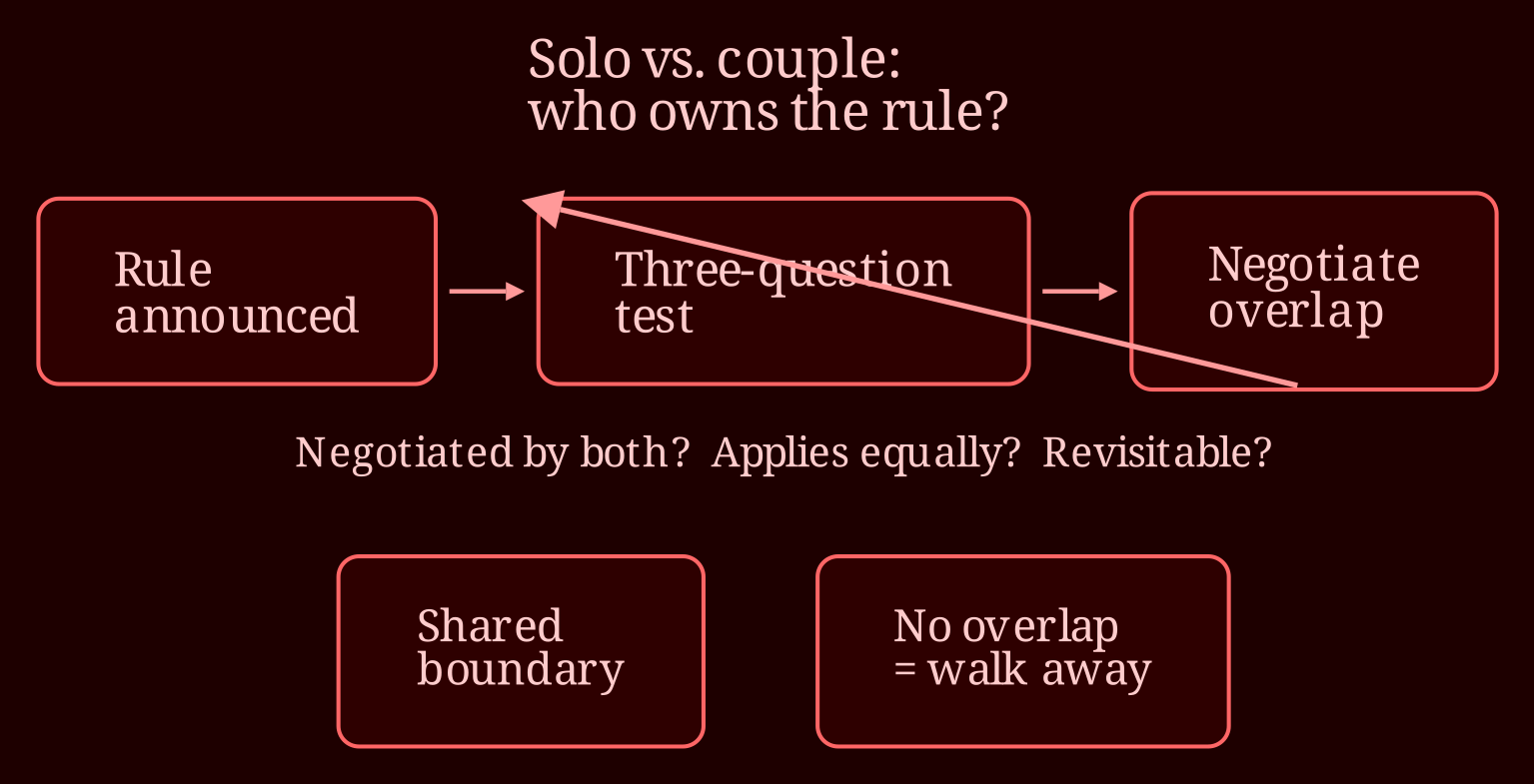
The test isn't whether a boundary exists. It's three questions: Was it negotiated by both people, or announced by one? Does it apply equally - would he accept the same restriction on himself? And can it be revisited without a fight? When the answers are "no, no, and no," you're not looking at a boundary. You're looking at a leash. The woman in the post clearly did the math and chose three years of singledom over that deal, and honestly, that's a form of self-respect worth naming.
So what does fair negotiation actually look like?
In healthy performer relationships I've seen, the conversation sounds less like "you're not allowed to" and more like "here's what I'm comfortable with, here's what you're comfortable with, let's find the overlap." Maybe the overlap is couple content for now. Maybe it's solo work with agreed limits. Maybe it breaks down because there's no overlap - and that's sad but honest, better than a rule one person quietly works around forever.
One caveat: this piece is built on one anonymized forum post and the kind of conversations that happen constantly in performer spaces - not a survey, and not about any identifiable person. It's a case study in a pattern, not a verdict on one couple.
If any of this resonates and you'd rather see the work done right than read about the drama around it, spend your cam time on xlovecam - performers there run their own shows on their own terms, which is exactly the autonomy this whole situation was missing.