How do twitter groups work? what is 1/3 and all the abbreviations?
TLDR
I remember joining my first RT group on Twitter and staring at the chat like it was written in code - "add/delete/1/3", "CU", "1/4" - with no clue what any of it meant. Turns out it's not that complicated, and a little etiquette goes a long way. Here's the decoder I wish I'd had on day one.
What is an RT group, and what does that shorthand like 1/3 actually mean?
First, the basics: a retweet group (sometimes called an engagement pod) is not an official Twitter feature. It's an informal circle of creators who agree to retweet each other's posts to boost visibility. These usually live in DMs, group chats, or third-party tools, and they're run by an admin who sets the rules.
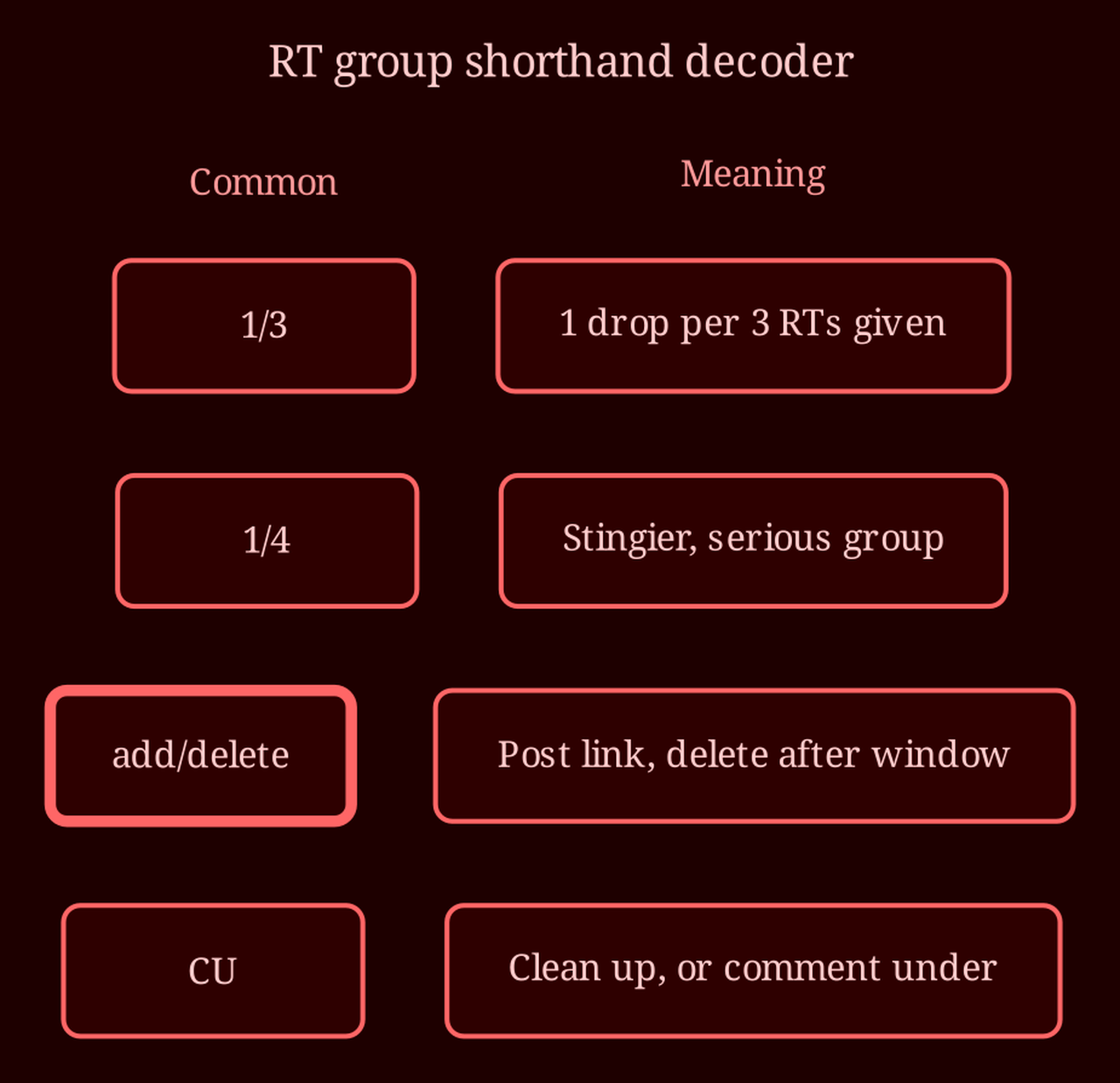
The confusing part is that every group seems to speak its own dialect. That fraction shorthand? It's almost always a participation ratio. "1/3" typically means you post one drop for every three retweets you give - you give more than you take. "1/4" is the same idea, just stingier, and usually a sign of a healthier, more serious group. When you see an instruction like "add/delete/1/3", it's a mini-format telling you: add your link, delete it after the window closes, and respect the 1-in-3 ratio.
Then there's "CU", which is genuinely ambiguous - in some groups it means "clean up" (delete your old RTs), in others it means "comment under" (reply to the original post, not just retweet it). This is the honest truth about these groups: the glossary isn't universal. The admin wrote the rules, so the admin is your dictionary. Look for the pinned post or rules message before you drop anything.
How do you actually survive your first week in one without getting kicked?
Simple: don't drop and ghost. The fastest way to get removed is to post your link, collect your retweets, and disappear. When you're first added, spend a day or two just watching. See how often people drop, what format they use, how long links stay up before being deleted, and whether the group expects comments and likes in addition to RTs.
When it's your turn, copy the drop format exactly - links, hashtags, ratios, delete timing. Don't retweet anything that violates the platform's rules (that can get you flagged alongside the original poster), don't delete your RTs too early since that wrecks the whole point, and be skeptical of any group asking for a paid entry fee. That's a common scam vector - vet before you pay.
Quality check on the group itself: is the admin active? Is it a dumping ground where fifty people drop links and nobody reciprocates? Small-to-medium groups with active moderation and clear ratios are worth your time. Giant ghost-town pods give you retweets from accounts nobody follows, which does almost nothing for real reach, and aggressive RT-for-RT behavior can even look spammy to the algorithm.
And to be sober about it: these groups can nudge visibility a bit at first, but they won't grow an account on their own. Real content and real engagement still carry you further than any pod ever will. The same is true if you're a cam performer trying to funnel Twitter traffic - a group drop helps for an hour, but a genuinely live, interactive space like xlovecam does far more for converting curiosity into actual fans than any retweet queue ever will.
So are RT groups worth sticking with long-term?
Treat them as a small booster, not a strategy. Give more than you take, ask the admin when the shorthand confuses you, and don't be afraid to leave a group that's all take and no give. Have you found that pods actually moved your numbers, or do you get better results just showing up consistently and talking to people who reply? And when you want engagement that's live instead of a recycled retweet, check out xlovecam - sometimes the best conversation is the one happening in real time.