What Tips Do Successful Creators Have for Getting Started?
TLDR
I've watched enough couples launch with a mountain of footage and a mountain of confidence, then quietly stall by month three. The ones who make it treat the first 90 days like a job with boundaries, not a hobby with perks. Here's how to protect your library, your subscribers, and your relationship from the classic rookie mistakes.
You've got a big library - is that actually an advantage?
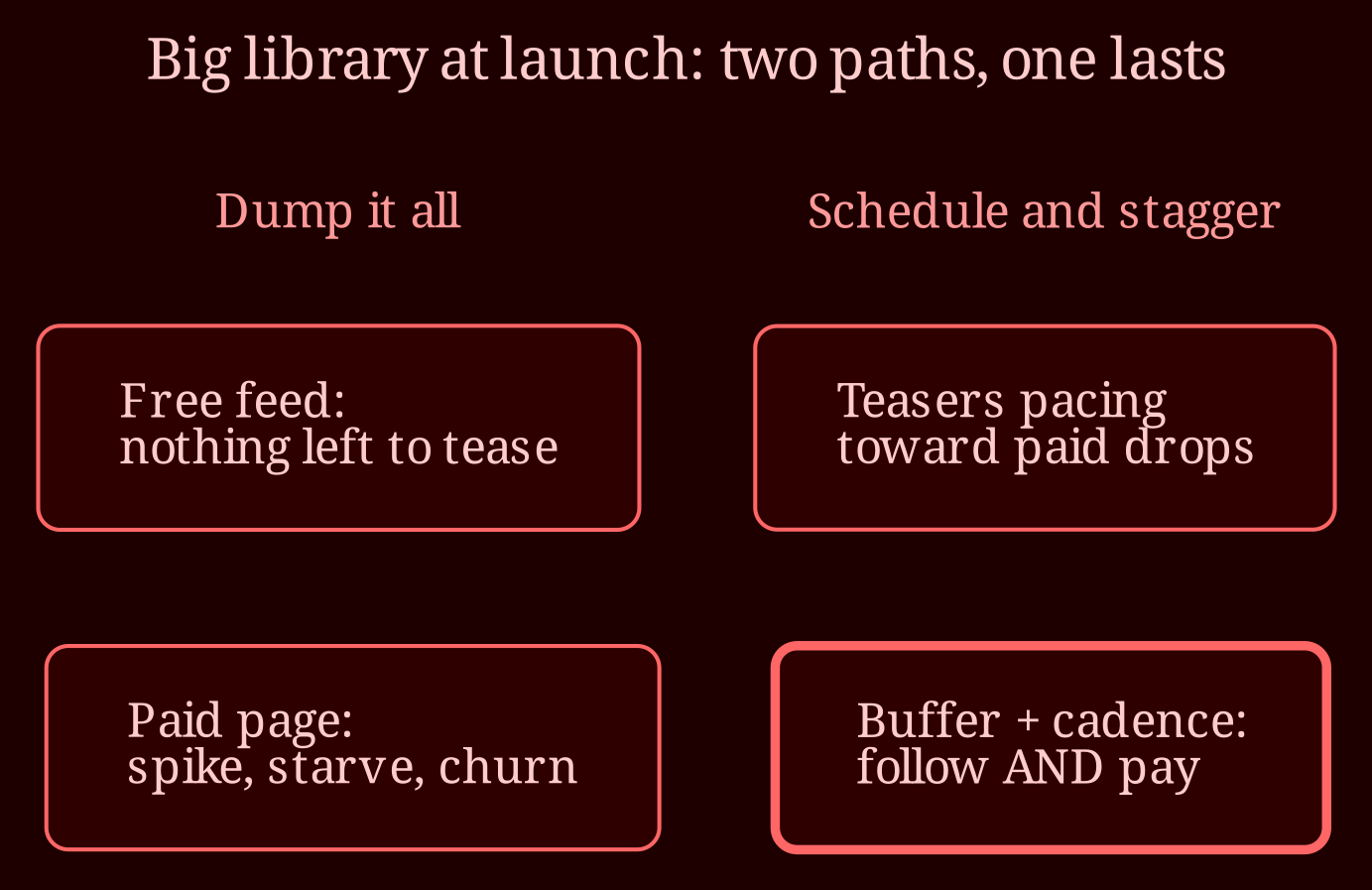
Only if you resist the urge to dump it all at once. The couples who last treat their existing footage like a studio treats film: cataloged, tagged, and scheduled in drops. Before you go live, sit down and sort everything into tiers - teaser clips, paid full scenes, and "pinch me" content you hold back for milestones or custom requests. Label files properly now, because in six months nobody remembers which clip was which angle. Faceless creators especially live and die on good titles and niche tags, since your content has to be found through descriptions rather than a personality-fueled feed.
Do the boring OPSEC pass *before* launch, not after. Check every clip for reflections in mirrors, glasses, phone screens, tattoos at frame edges, and identifying audio - a voice is a confession even when the face is cropped. Turn on two-factor authentication, use separate accounts, and keep backups on drives that never touch your personal devices. Faceless lowers your exposure risk; it doesn't eliminate it.
What's the right posting rhythm once you launch?
The mistake almost everyone makes is flooding the page in week one because they can. You'll spike, then starve, then post sporadically, and the algorithm and subscribers both punish that. Creators who've been at it six-plus months almost universally say the same thing: pick a sustainable schedule - even if it's just a few solid posts per week - and keep a buffer of finished content ready to go. Your library gives you room to build that buffer; most people launching from zero don't. Use it.
Stagger your paid content against your teasers so you're always giving people a reason to follow *and* a reason to pay, never just one. And don't under-price. New creators routinely charge too little thinking it buys loyalty. It mostly buys subscribers who churn at renewal and fans who treat your rate as the floor forever. Charge something you don't resent, watch your analytics for the first two months instead of guessing, and let the data - not a forum thread - tell you what your niche actually wants.
How do you handle subscribers - and each other - without burning out?
The biggest "wish I'd known" from established creators is about the obligation spiral. Answer messages when you can, but you don't owe instant replies, and you especially don't owe customs you never agreed to do. Set your boundaries in your pinned post from day one: what you do, what you don't, response times, and tipping norms. Every boundary you state early prevents an awkward negotiation later, and it keeps a handful of pushy fans from setting the tone for your whole business.
For couples specifically: divide the labor before launch. Someone edits, someone handles admin and messages, and both of you should know what's on and off camera - including whether either of you can change that mind later. Two people also means double the burnout risk if one person becomes the designated "everything else" department. Check in with each other weekly, not just when something breaks. Your working relationship is the actual product here; the footage is the wrapper.
And when you need to see what a polished, consistent creator operation looks like in the wild - whether for inspiration on pacing, styling, or the sheer discipline of a regularly updated page - browsing a well-run live platform like XLoveCam is a genuinely useful way to study how professionals keep a schedule and hold an audience.
What happens when the novelty wears off?
That's the real question, isn't it? Most couples who fade out don't quit because the content failed - they quit because posting became a chore, messages became a burden, and the partnership absorbed all of it. So turn this back on yourselves before launch day: Can your schedule survive your worst week, not your best one? Is your buffer deep enough that a sick day doesn't break the streak? Do you both (or either of you) have a hard stop? If you can answer those honestly, your library stops being a pile of clips and becomes what it should be - a head start on a business built to outlast the honeymoon phase. What's your plan for month four?